What a custom intake or airbox actually is
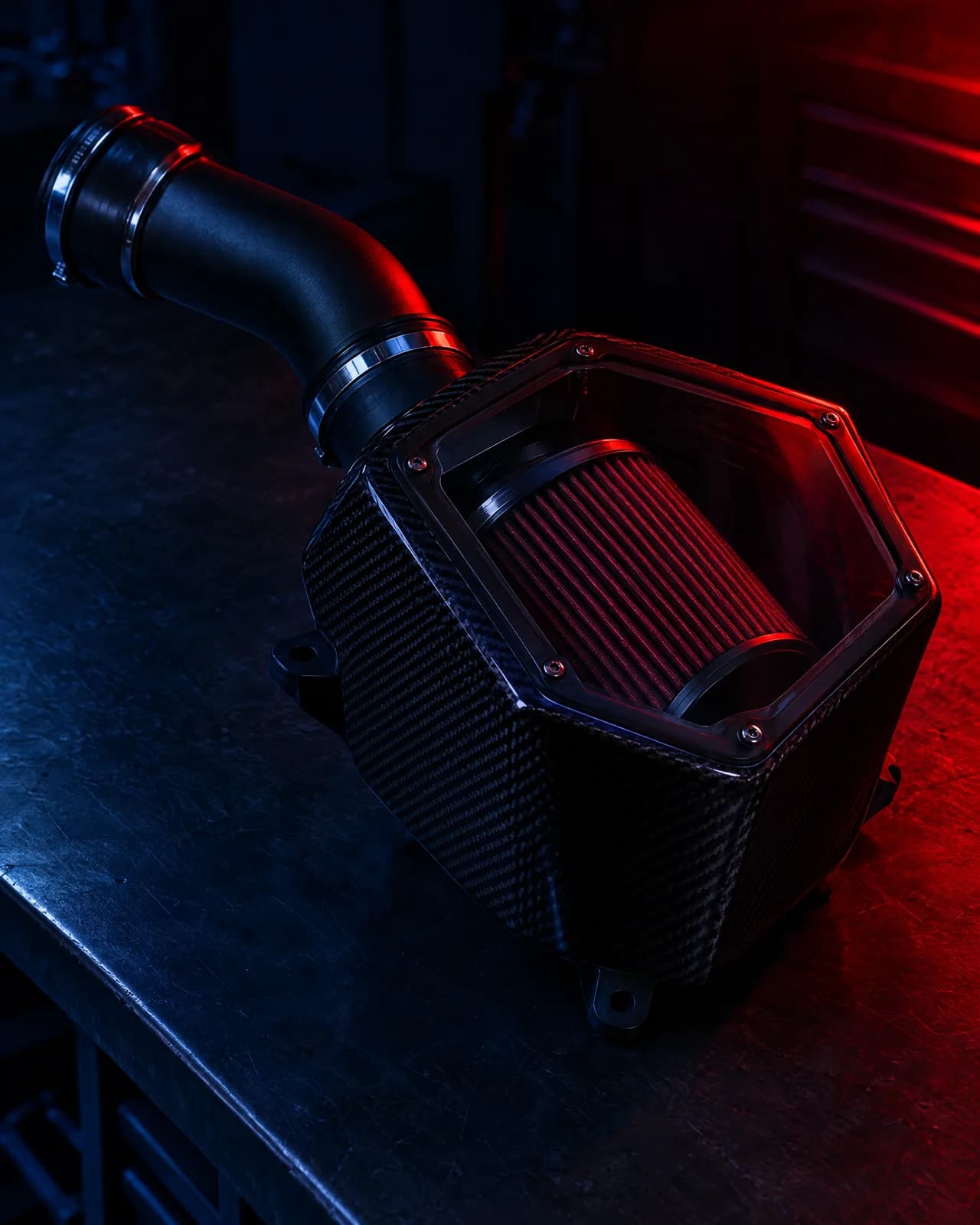
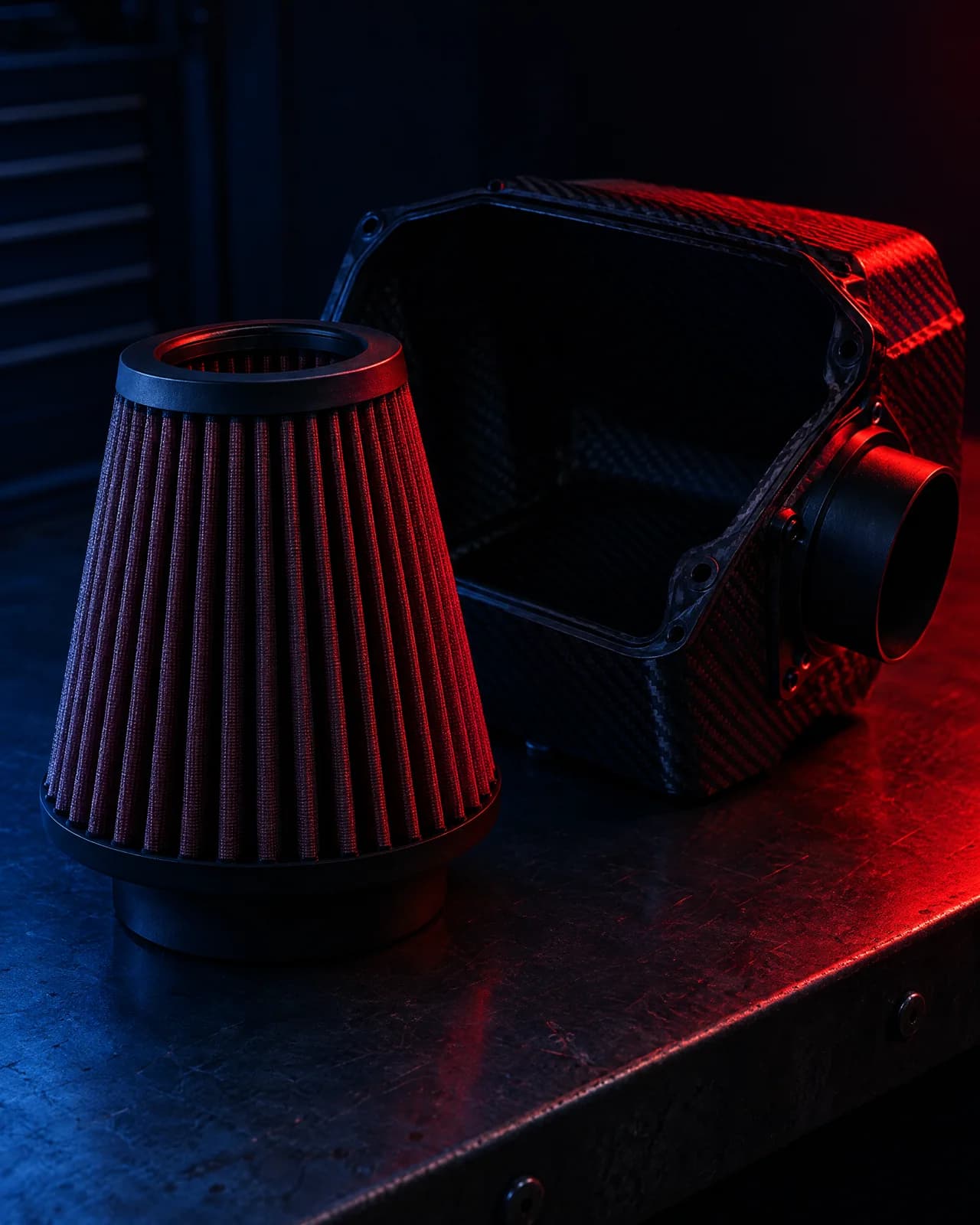
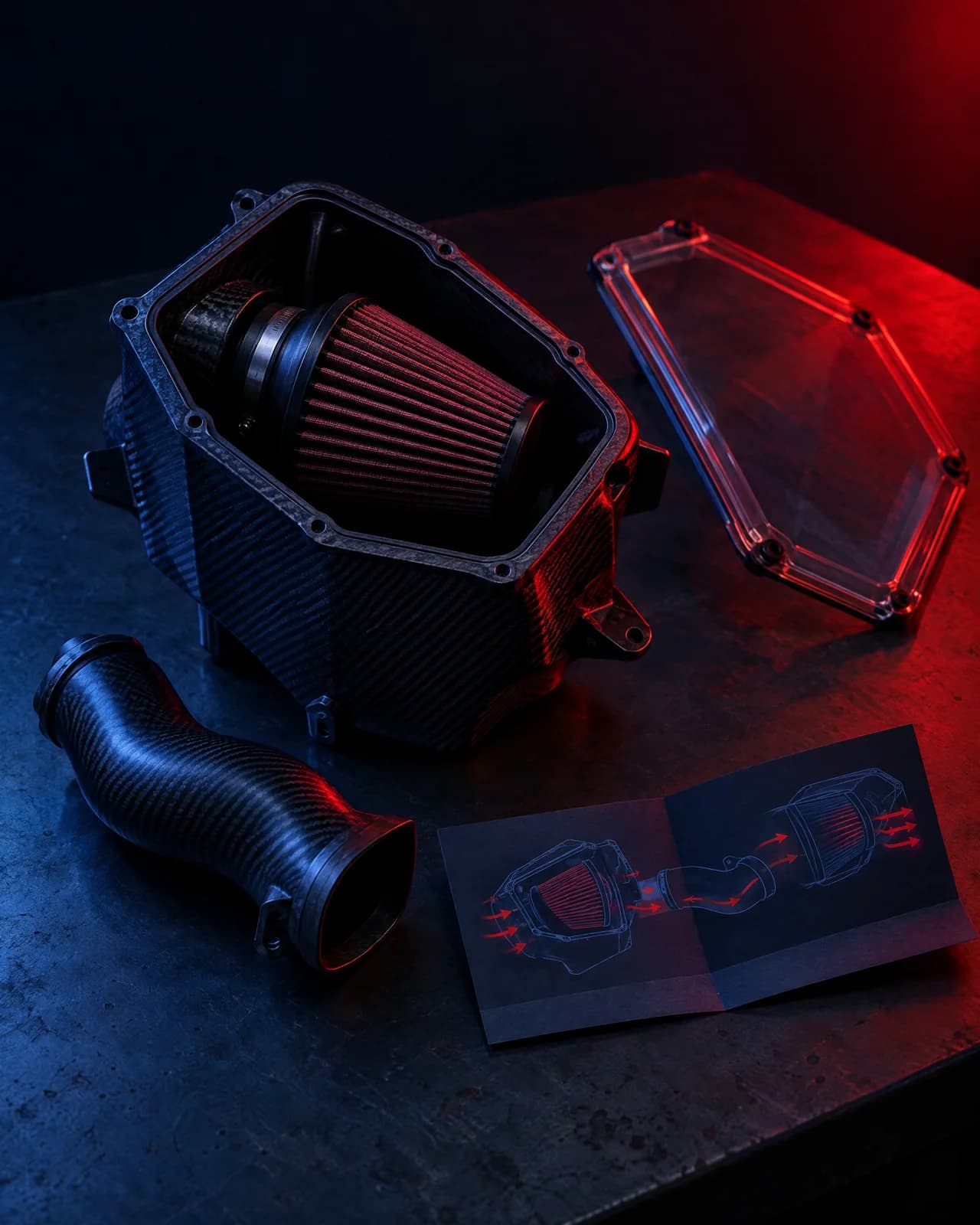
A cold air intake is the whole path that feeds the engine its air: the box around the filter, the pipe that carries the air, the filter itself, and the feed that brings cooler air in from outside the hottest part of the bay. An airbox is the enclosure around the filter. People use both terms loosely, and some products are one, some the other, and some are both.
The word that matters here is custom. When we say a custom intake or airbox, we mean one designed around your specific car: the engine bay is 3D scanned, the box and pipework are modelled over that scan in CAD, and the part is made to clear what is actually in the bay and bolt to the mounting points already there. That is a different thing from a universal pod filter on a bracket, which fits many cars by fitting none of them properly.
Why vehicle-specific beats a universal pod
An open pod filter sits exposed in the engine bay, breathing the hot air around it and catching whatever the bay throws at it. An enclosed, vehicle-specific airbox does the opposite: it boxes the filter in, isolates it from engine bay heat, and draws cooler ambient air through a dedicated feed. That is the whole point of an enclosure, and it is why our products are enclosed rather than open.
Because the box is designed from a scan of your car, it uses the factory mounting locations, clears the surrounding parts, and looks like it belongs there. It is a bolt-in job with no drilling and no brackets you have to fabricate, and it is fully reversible if you ever want the car back to standard.
A full intake system or an airbox enclosure?
If your car is otherwise standard, a complete intake system is usually the answer: it replaces the airbox, the pipe and the filter as one designed assembly, with a cold-air feed. Our GR Corolla, 370Z, A80 Supra and Liberty 3.6R products are complete systems of this kind, each developed for that car.
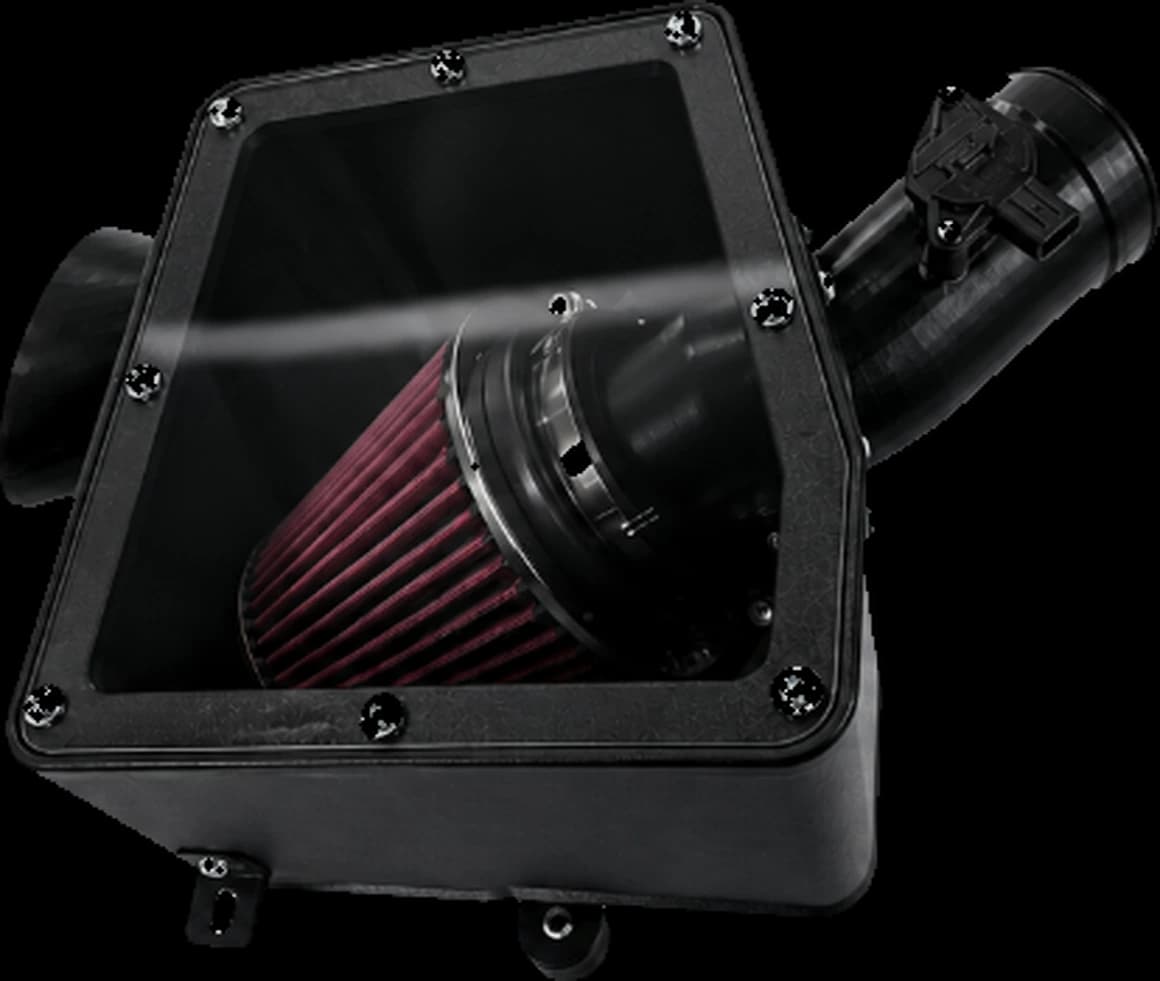
If you already run a popular aftermarket intake with an exposed filter, an airbox enclosure can be the better buy: it boxes in the filter you already have rather than replacing the lot. The i30 N airbox enclosures are exactly this, built to enclose the Forge Motorsport intake on the Hatch and the Sedan. The question to start with is simply what your car runs now.
What a quality custom intake is made of
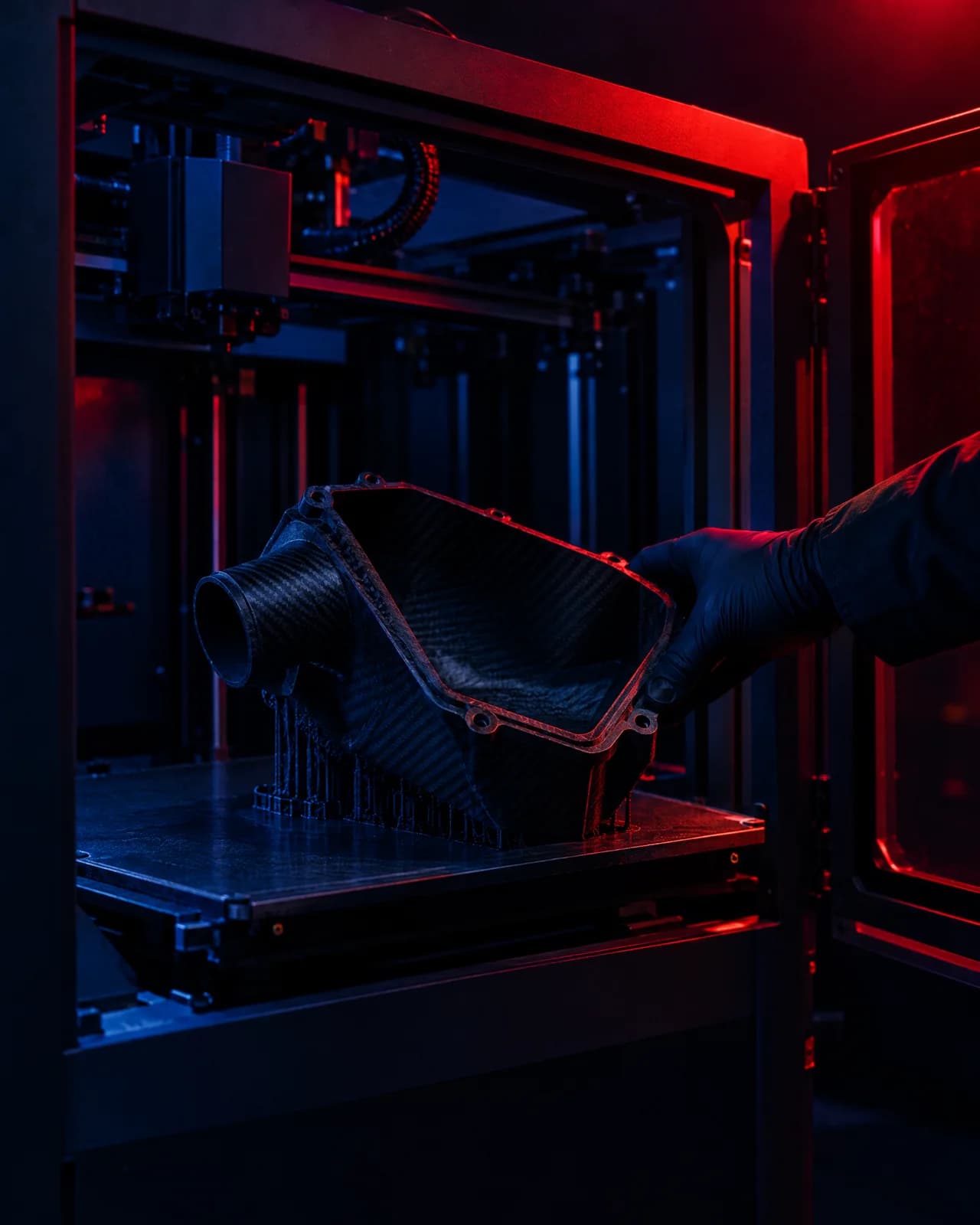
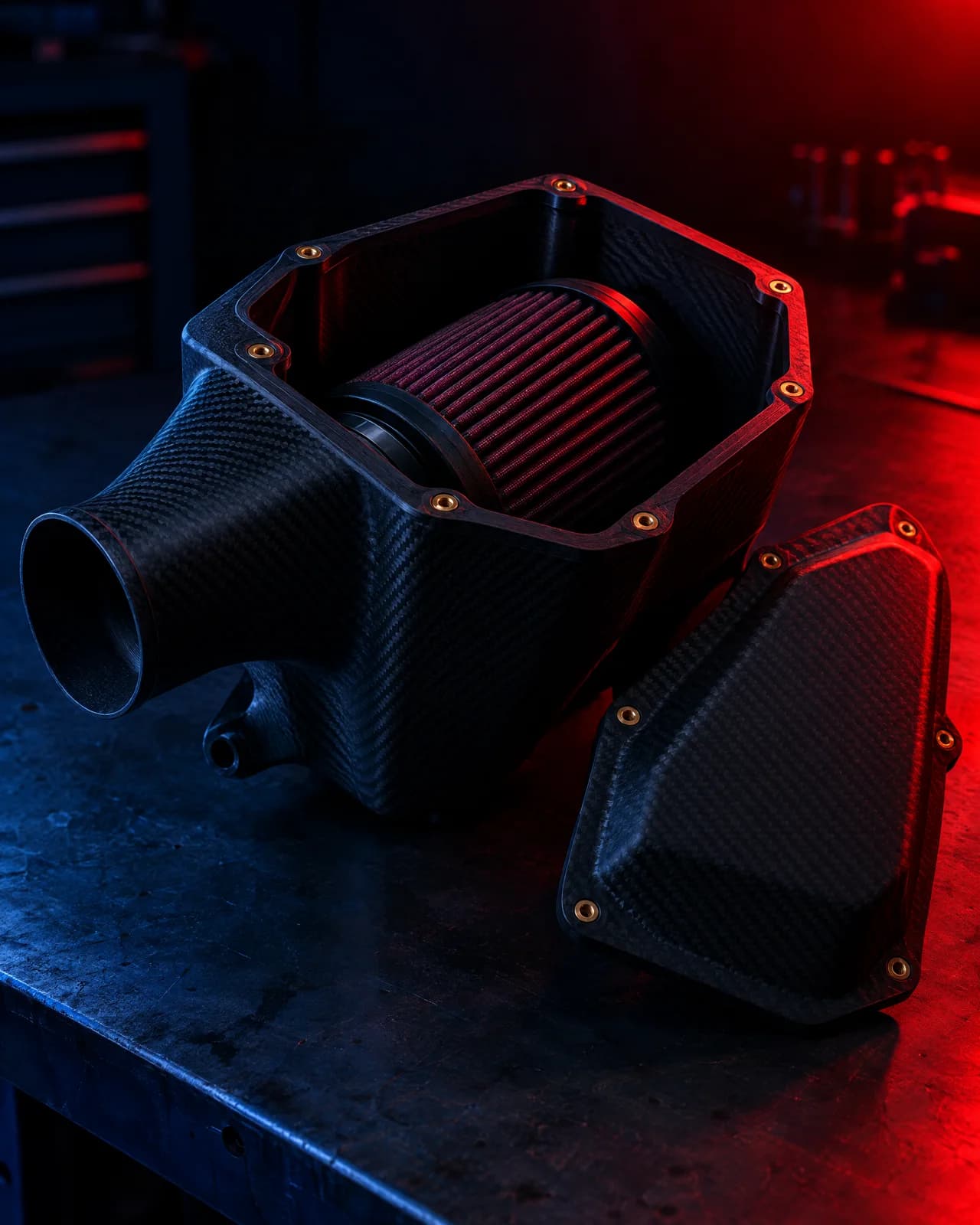
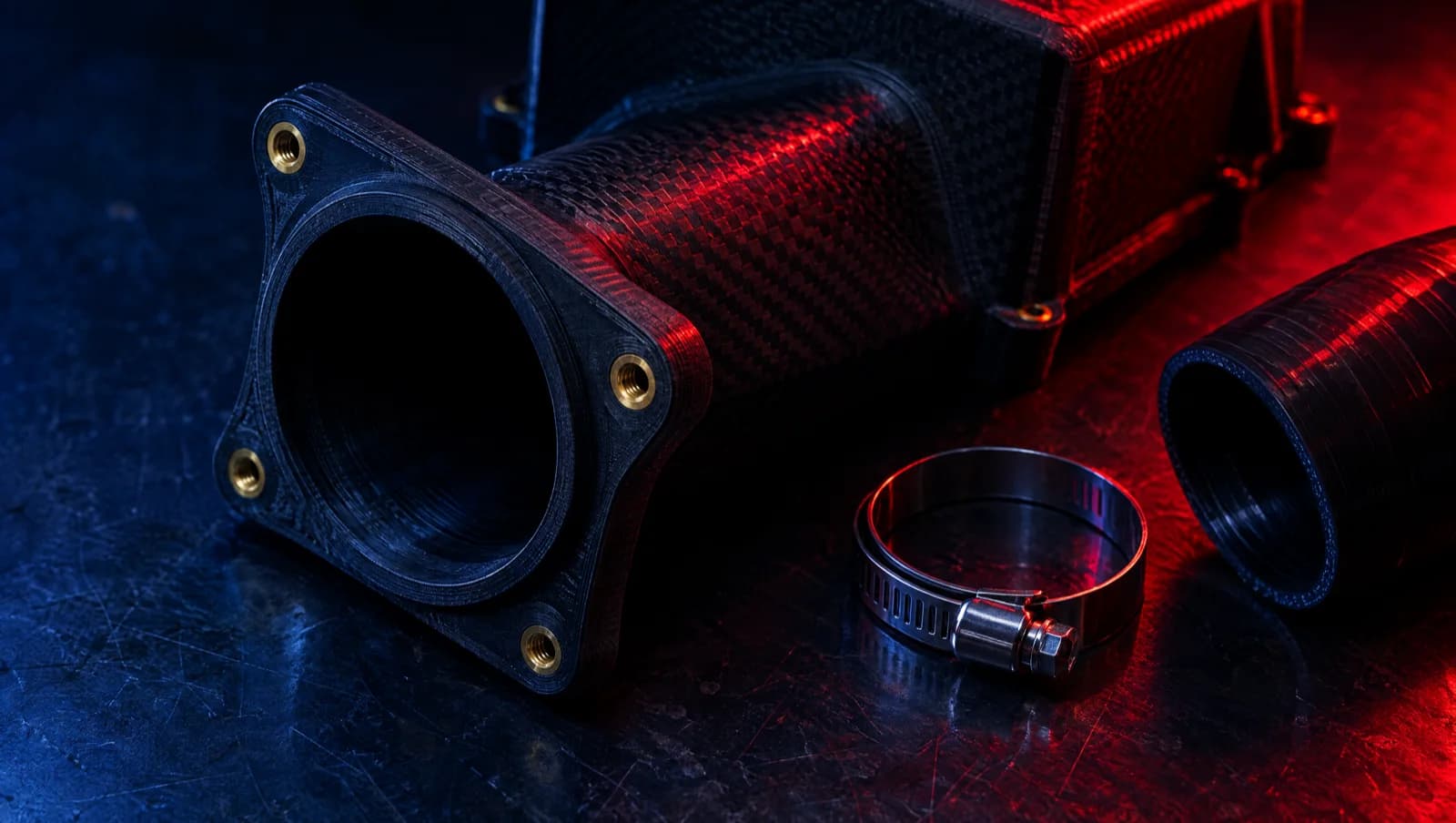
Materials are chosen per part, not per brochure. The main box, exit pipe and mounts are 3D printed in PC-CF, a polycarbonate reinforced with carbon fibre, for strength, rigidity and heat resistance next to an engine. The flexible parts, the intake ducts, gaskets and mounting bushes, are TPU, so the assembly can seal and move without cracking. Some enclosures use ASA-CF, another carbon-fibre reinforced polymer. Brass heat-set inserts give the lid real metal threads to bolt down to, and where a product has a metal panel or bracket it is powder-coated steel.
The lid is usually clear polycarbonate, so the filter stays visible and a quick inspection does not mean pulling the box apart. The printed parts are made in-house in Brendale, and every product lists exactly what each part is made of on its own page, because the honest answer is per part.
Do you need a tune?
For an airbox-type product, no: a tune is not required simply to fit it. Whether further tuning adds anything depends on the rest of the car's setup, so the answer is product-specific rather than a blanket yes or no.
The one current exception worth knowing up front is the GR Corolla intake, which, like most aftermarket intakes for that car, can trigger an error code relating to the pressure difference through the PCV system. Tuning the car clears it, and a solution for owners who don't intend to tune is in development. There is a dedicated guide on this if you want the longer answer.
We don't publish airflow, temperature or power figures for any product. There's no test data behind such numbers that would hold across cars, so we describe what the part is made of and how it's designed instead.
Choosing one, or getting one for a car we haven't built yet
Start with the car. If it is in our range, the product page lists what it fits, what it is made of and what is in the box. If you already run an aftermarket intake, look at the airbox enclosures; if the car is standard, look at the complete systems.
If your car is not in the range, it can still be done. We design new products from a 3D scan of a specific car through our scanning, CAD and manufacturing work, and the Development Vehicle Program exists for exactly this. The R34 GTT airbox is an example of a part custom made to suit each car's setup rather than sold off the shelf, including the option to house the airflow meter inside the box. Tell us the car and what is in the bay, and we will tell you honestly whether we can build it.