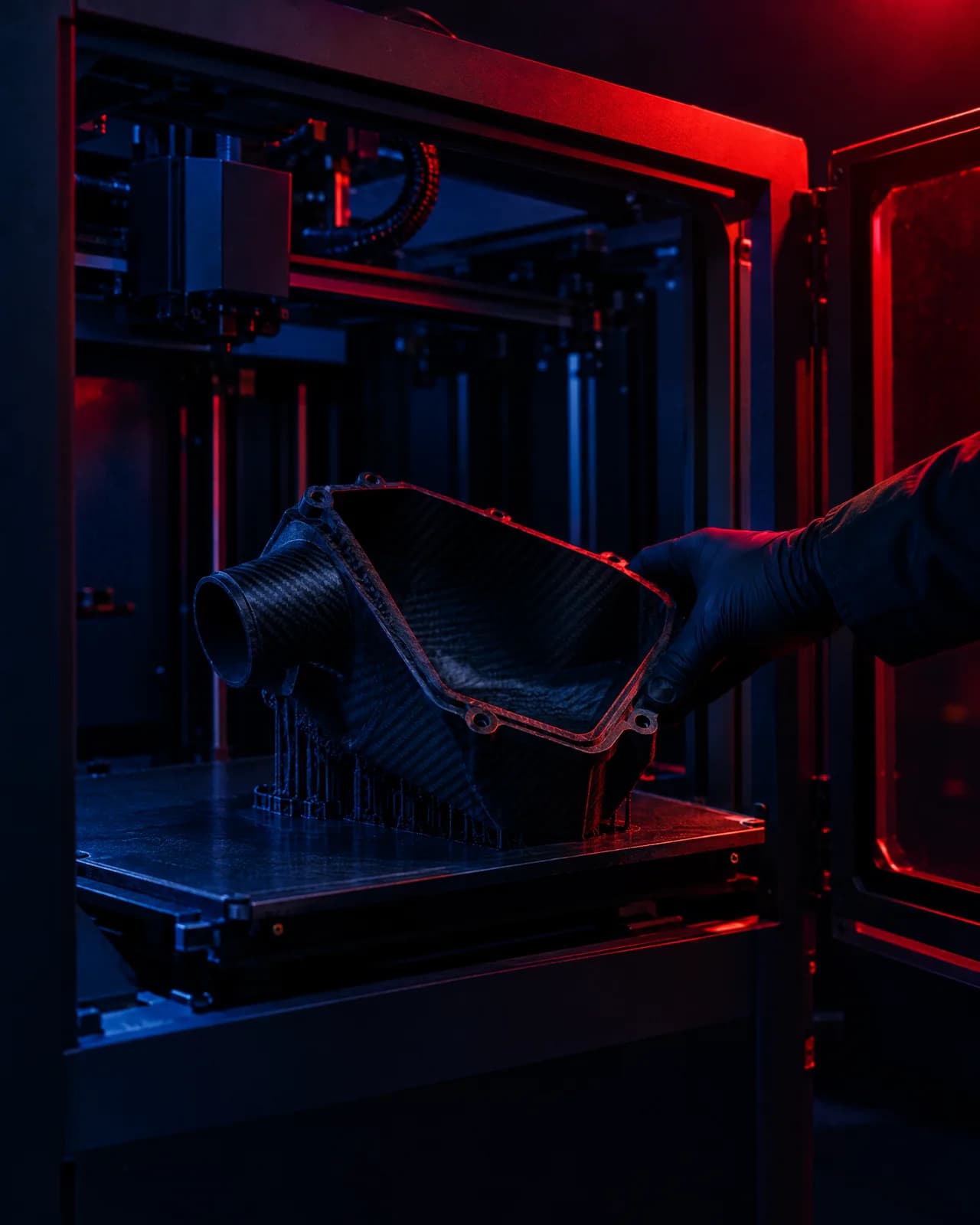
1. Scan the car
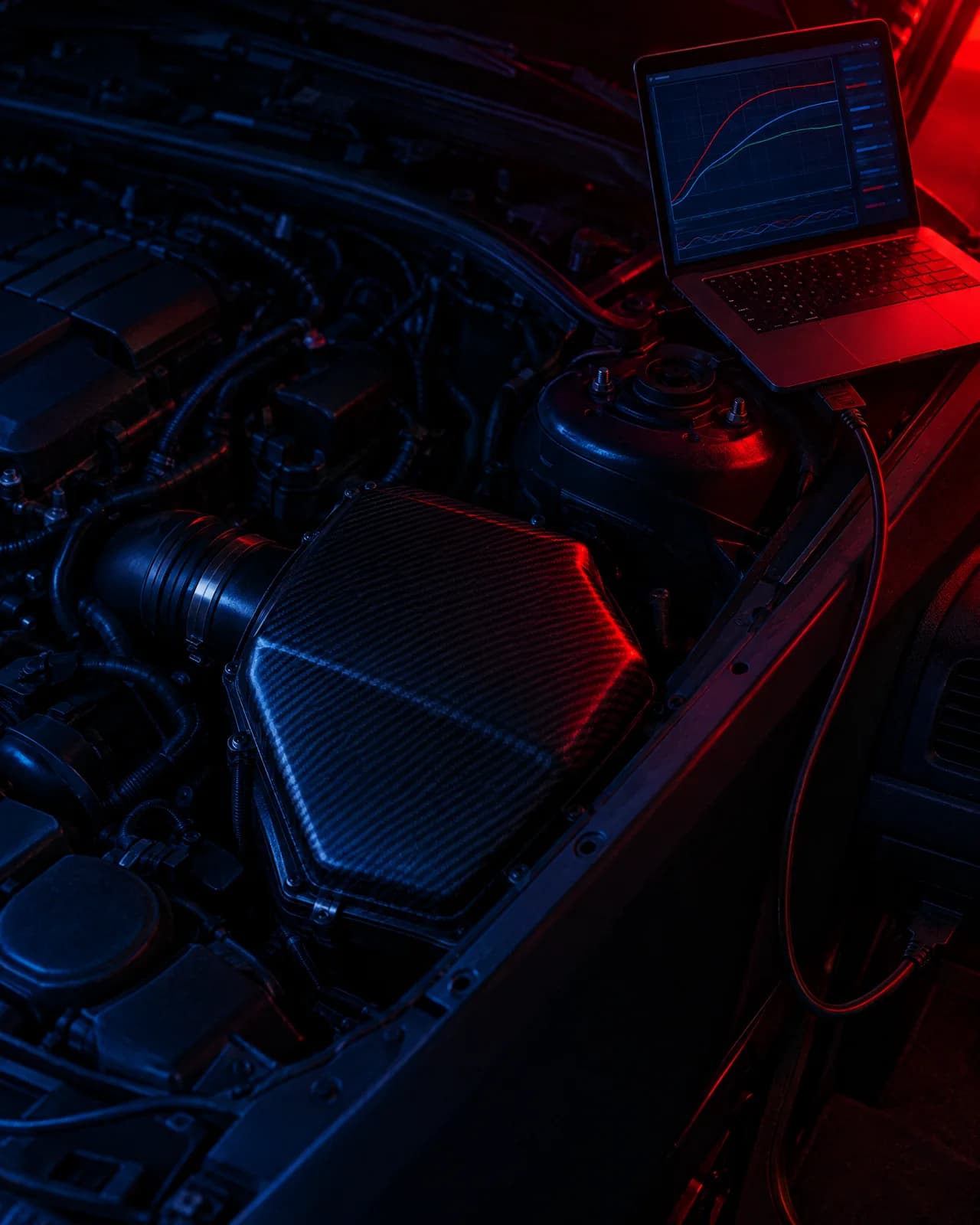
A handheld 3D scanner captures the engine bay as it actually is — factory parts, aftermarket parts, the space between them. The mesh becomes the reference everything else is built against. It's why our parts clear what's in the way and bolt to what's already there: we designed around it, not around a factory CAD file of a car that doesn't have your turbo.
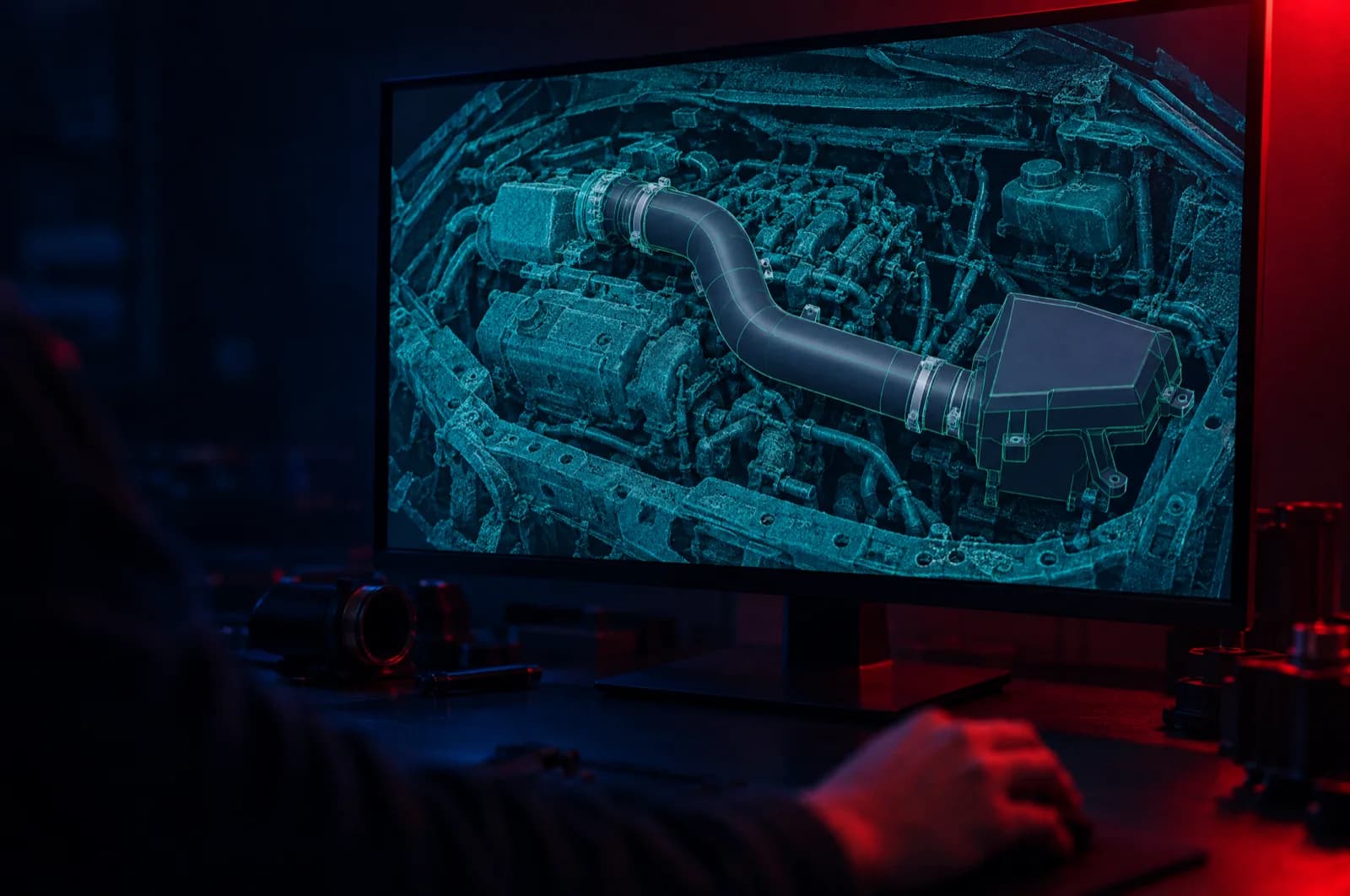
2. Design over the mesh
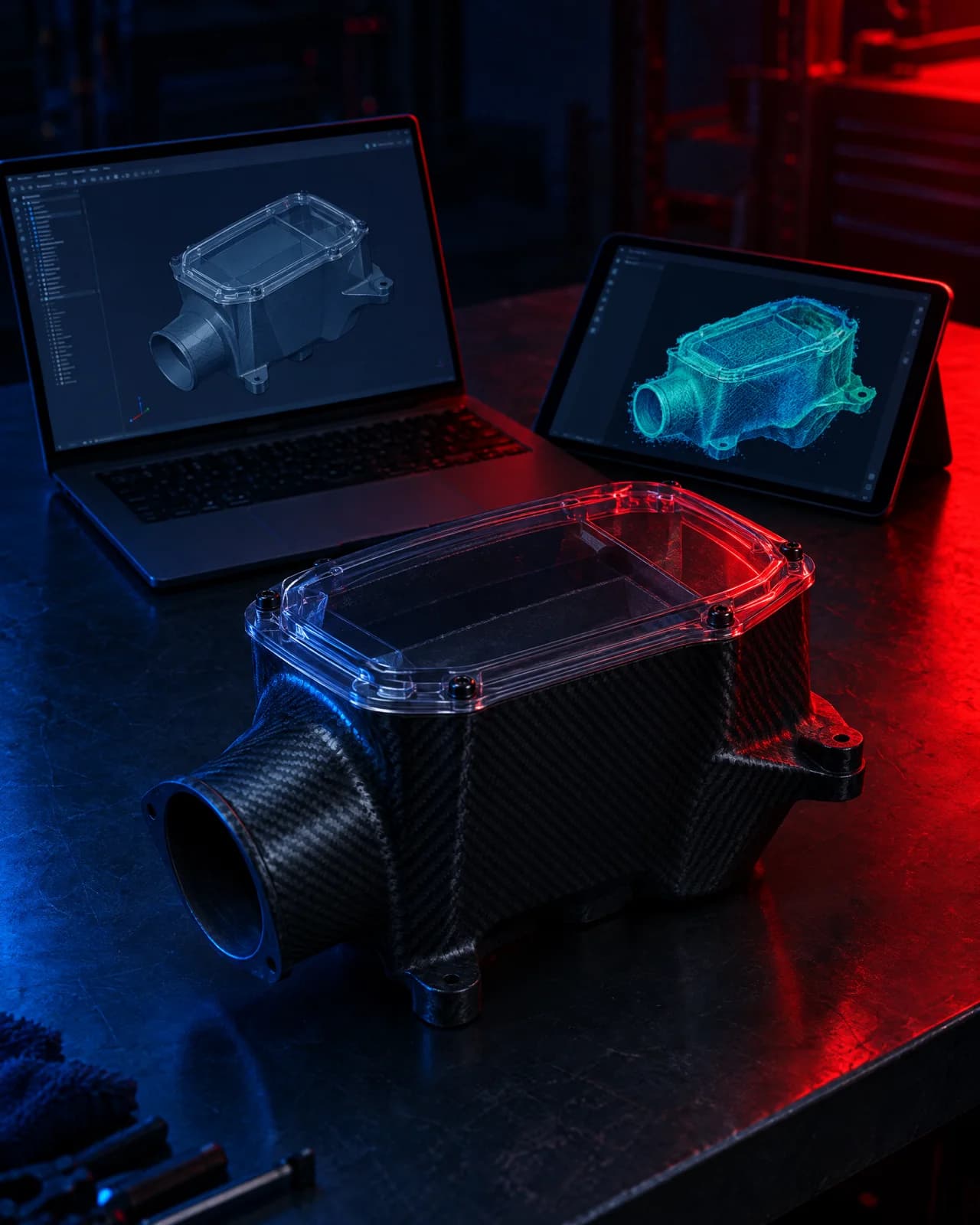
The box, the lid, the pipe and the mounts are modelled in CAD with the scan mesh underneath. Wall thicknesses, print orientation, where the brass inserts go, how the lid seals, where the cold-air feed comes from — all decided here, by a mechanical engineer, for manufacturability as much as fit.
3. Materials, per part
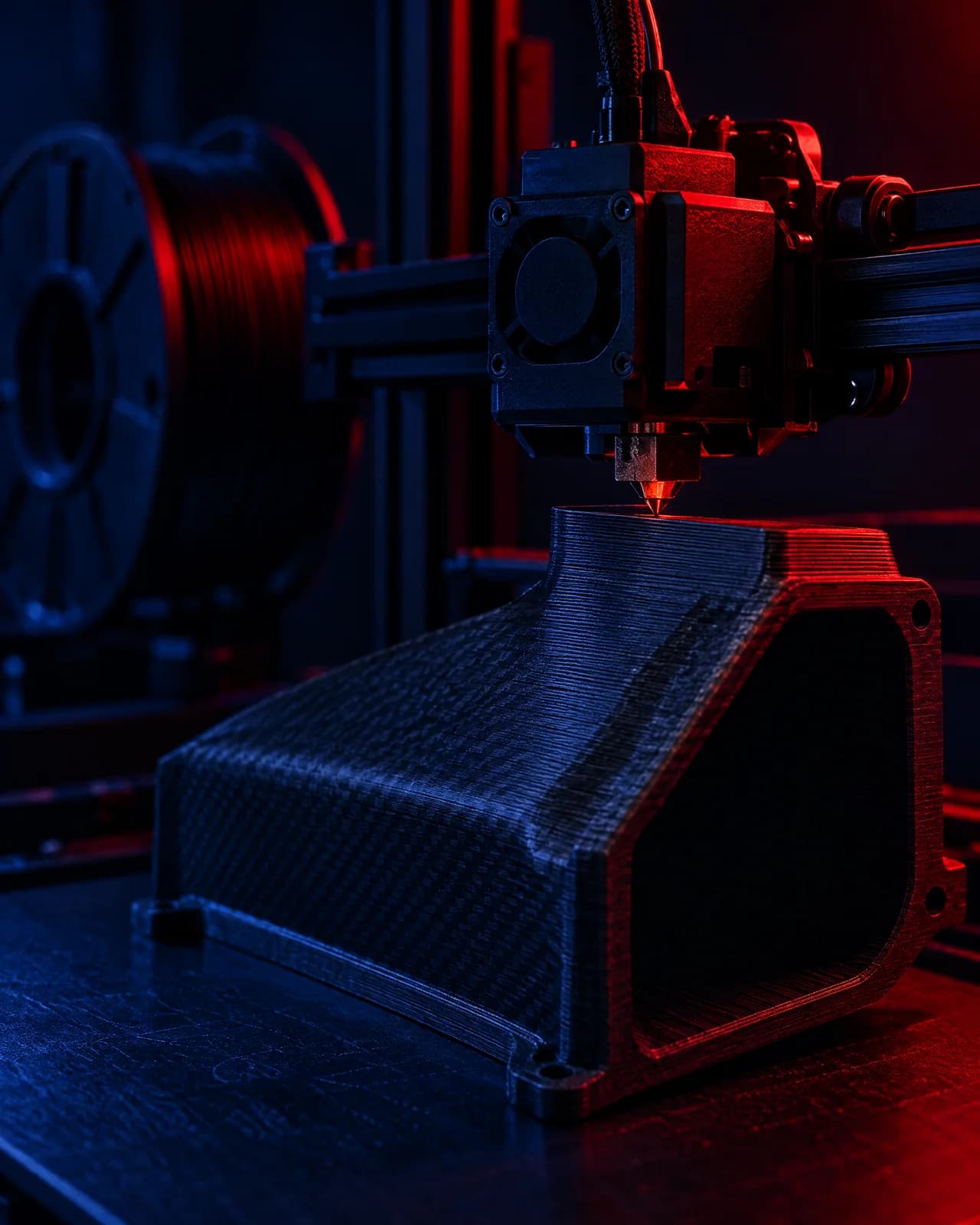
Main boxes and exit pipes are printed in PC-CF — polycarbonate with carbon-fibre reinforcement — chosen for strength, heat resistance and dimensional stability next to an engine. Intake ducts, gaskets and mounting bushes are TPU where the assembly needs to flex or seal. Lids are clear polycarbonate sheet, cut here. Other materials — ASA, high-temperature nylons — are used where a specific part calls for them. What each product is made of is listed on its page, because the answer is per part, not per brand.
4. Print, finish, assemble
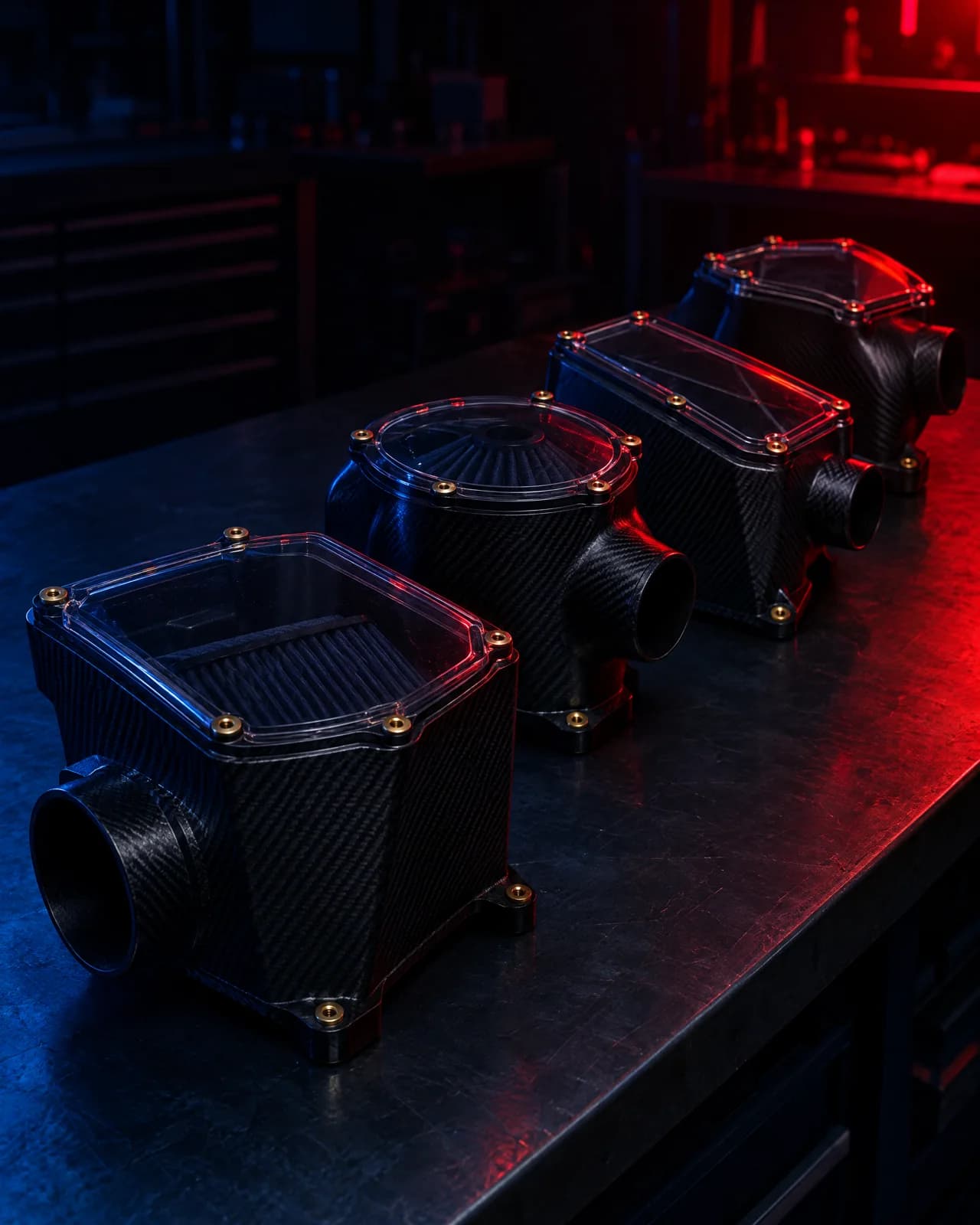
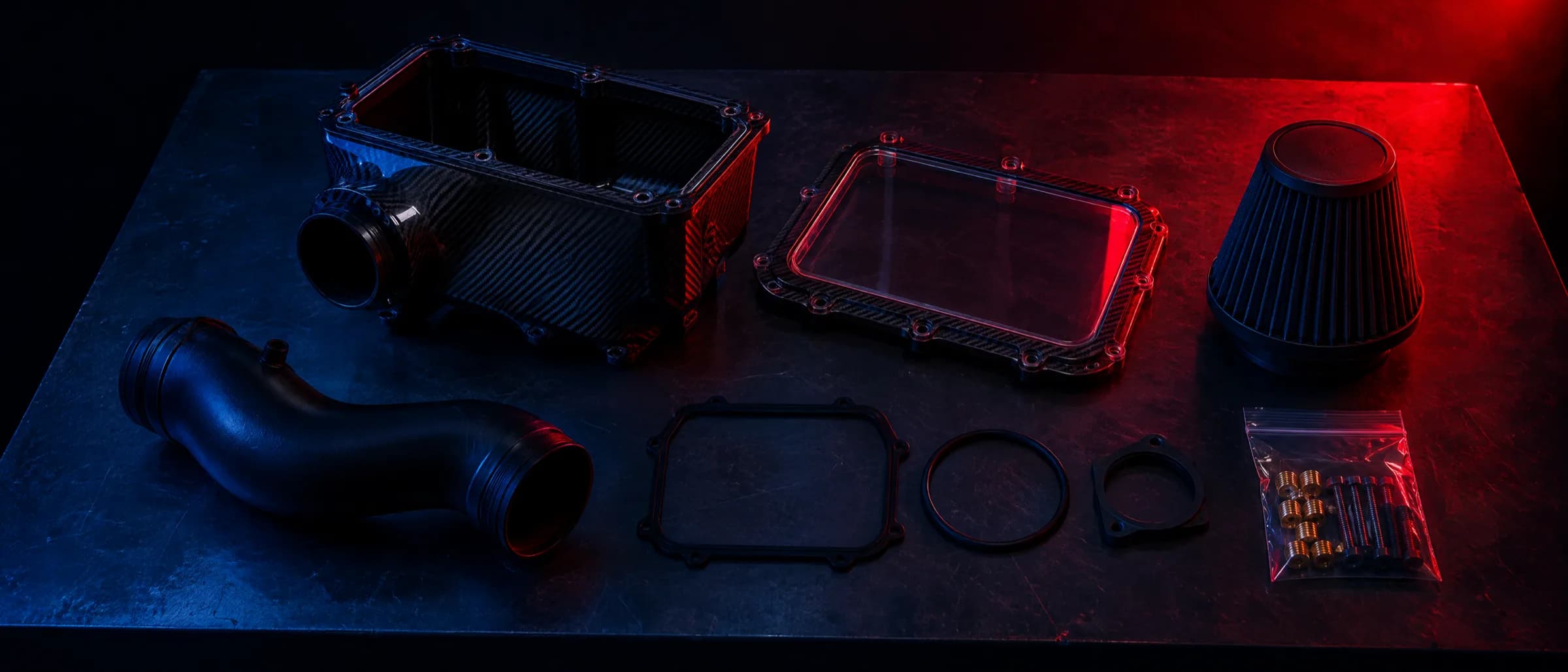
Parts are printed in-house, then finished: brass heat-set inserts installed so the lid bolts down to metal threads, the polycarbonate lid cut and fitted, gaskets and bushes fitted, hardware bagged. Where a product has a metal component — the GR Corolla's powder-coated cooling panel, for instance — it's laser cut and powder coated, then assembled here.
5. Test fit, revise, then sell
The first part goes on the car it was scanned from. Because the scan was accurate, the first fit is usually close, and revisions are refinements rather than rescues. Once it's right, the design is locked and the product goes into the catalogue as made-to-order: each one is manufactured when you order it, to the locked file.