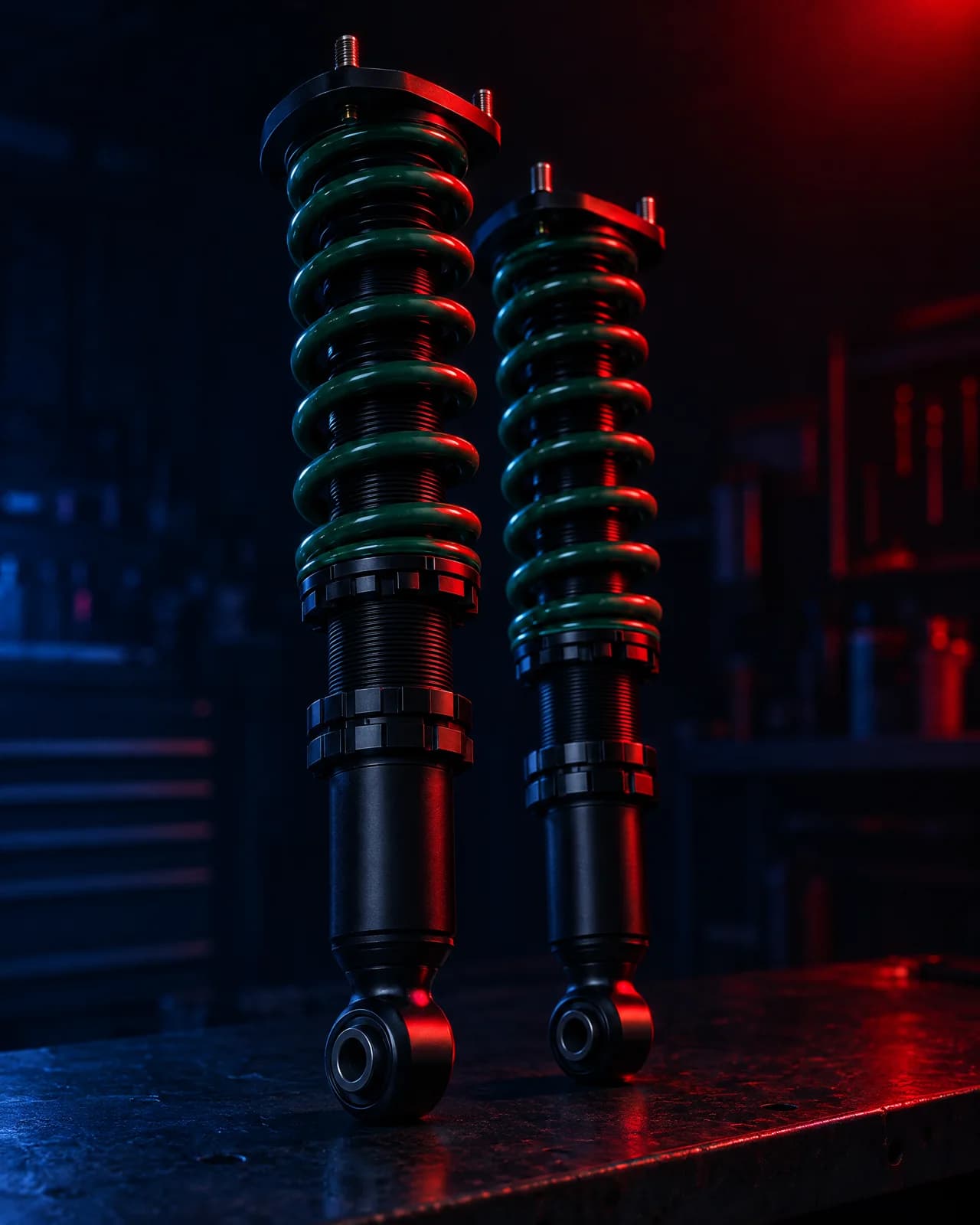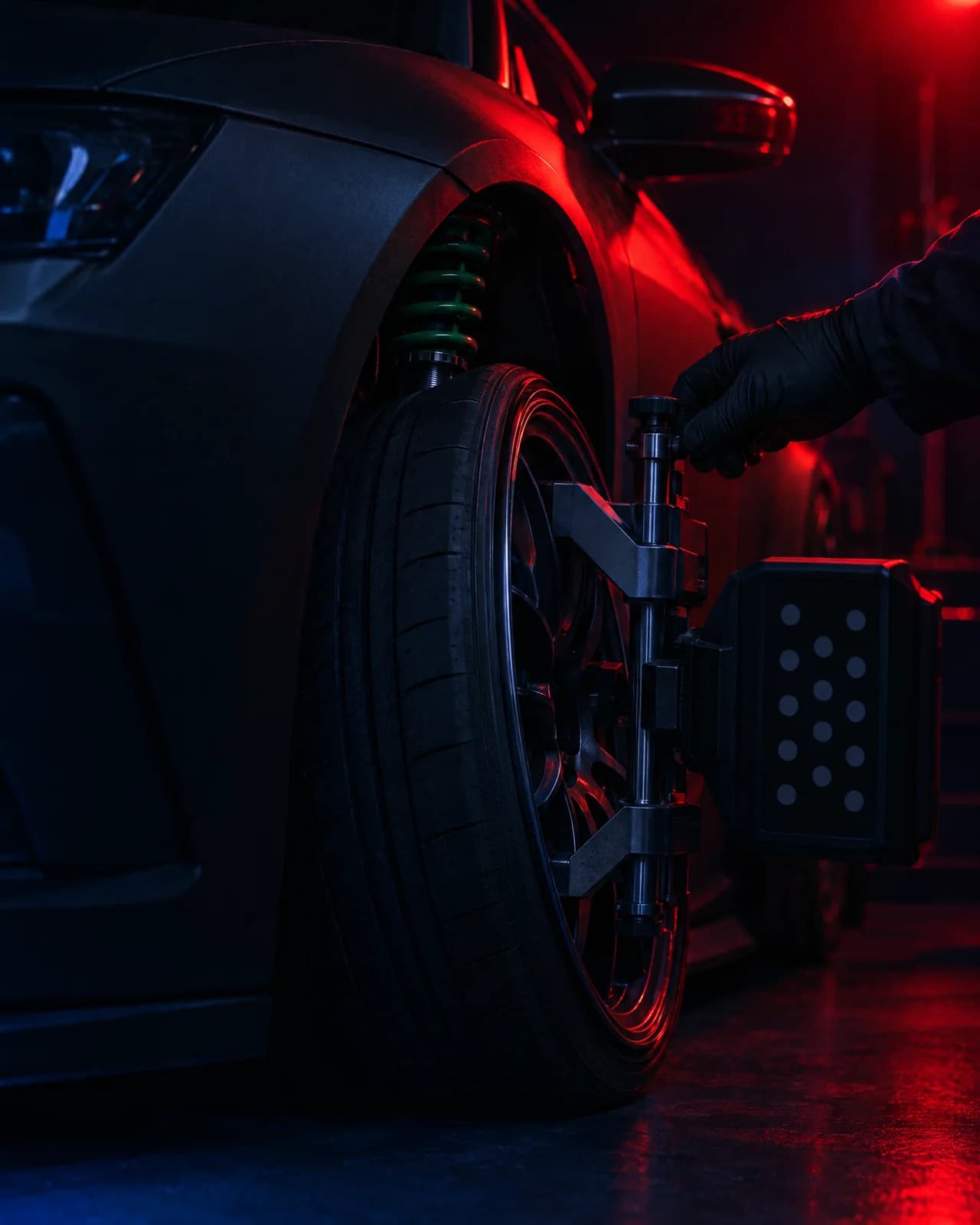
Why lowering moves the geometry
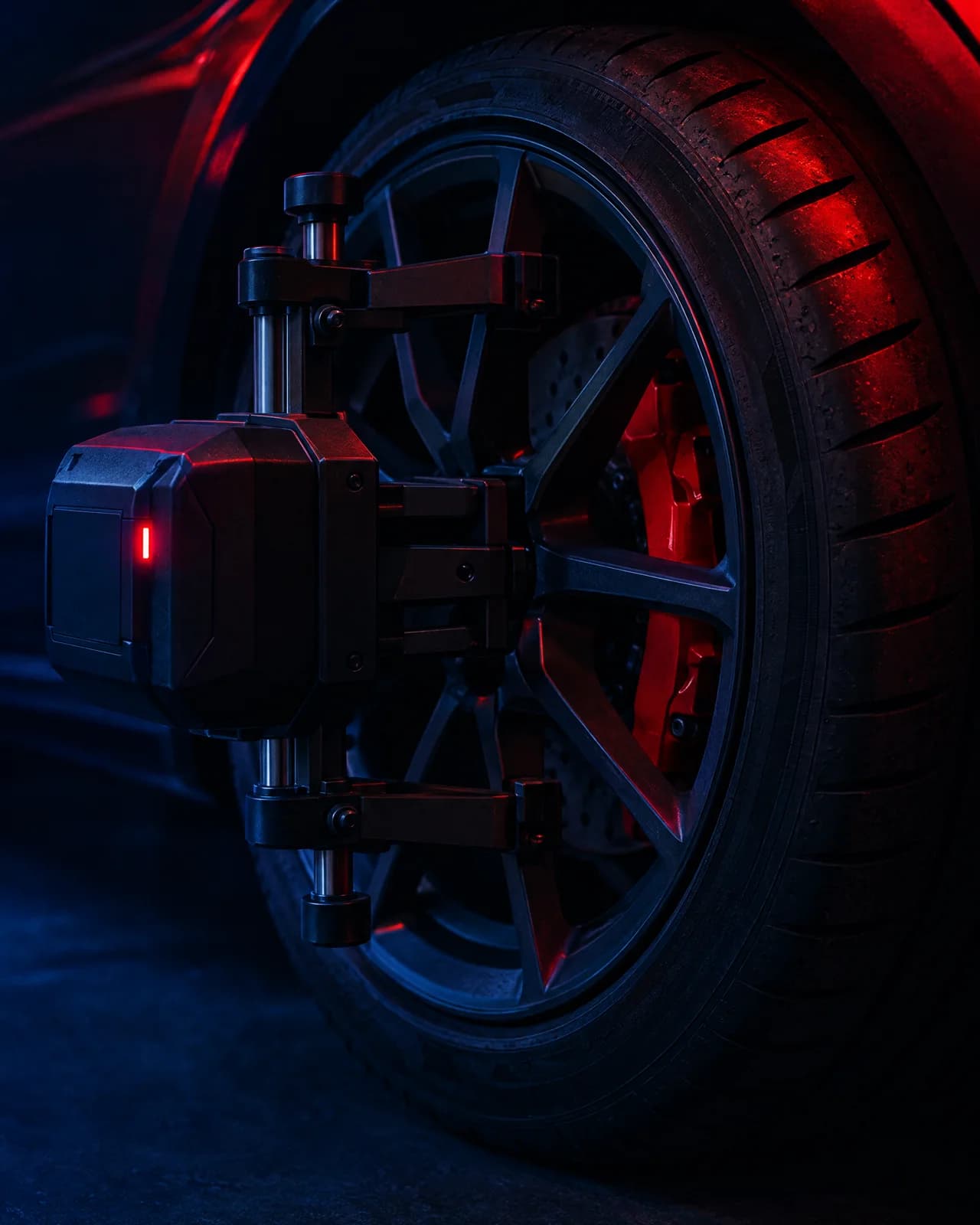
On a MacPherson strut or a double-wishbone front end, the arms swing on arcs. Lower the body and the arms sit at a different point on the arc, which changes camber — how much the wheel leans in — and toe — whether the wheels point slightly in or out. The change is not small. A car dropped a modest amount can gain enough negative camber and toe-out to wear the inside edge off a set of tyres in a few thousand kilometres.
What happens if you skip it
Inside-edge tyre wear first. Then a steering wheel that isn't centred and a car that wanders or tramlines on grooved roads. Then a car that feels darty and nervous at speed, because toe-out on the front does that. And a lingering sense that the new suspension 'didn't really help' — when it's the geometry that's wrong, not the parts.
Half the 'my coilovers ruined the car' stories we hear are cars that were never aligned after fitting.
Not just springs and coilovers
New control-arm bushes move the arm back to where it should be — which changes the geometry from where it was with worn bushes. Adjustable top mounts, control arms, camber bolts and strut braces that were fitted with the towers pulled into position all shift things. Sway bars alone don't; everything else does.
The right order
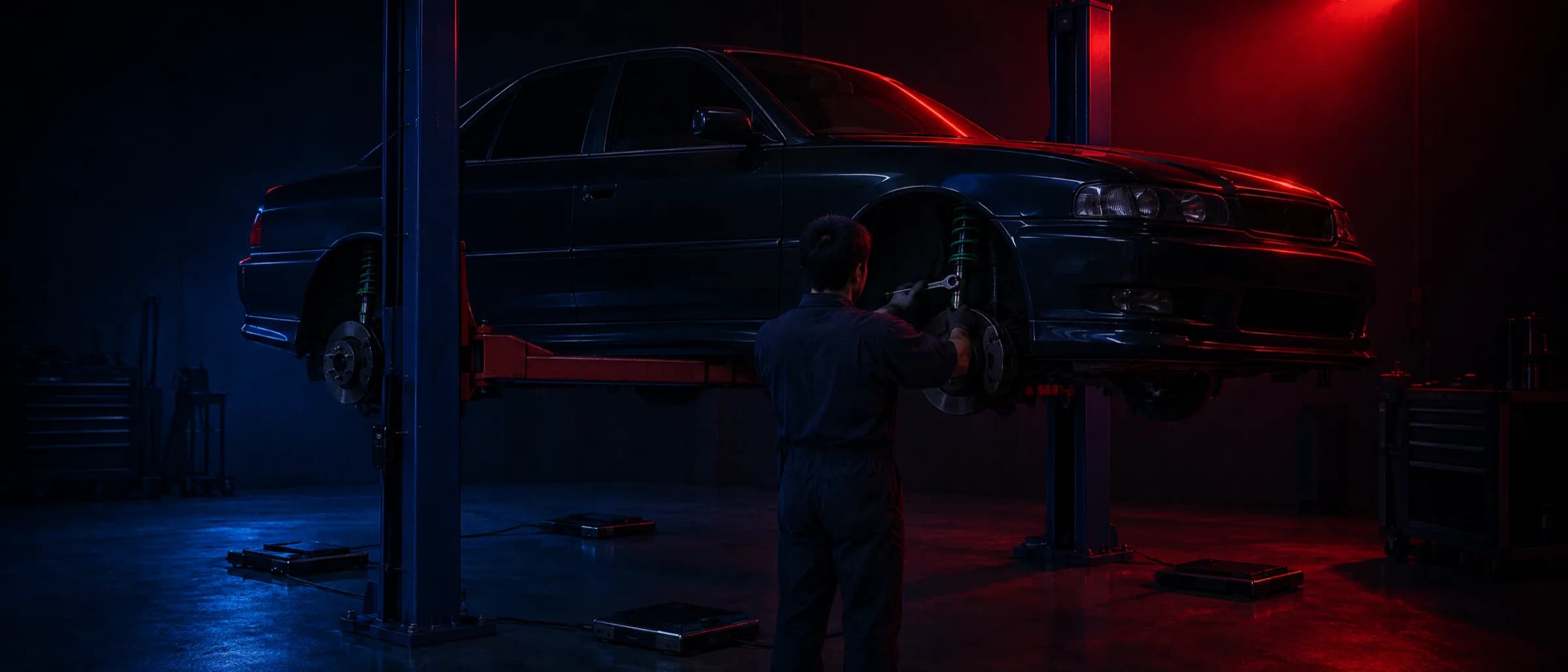
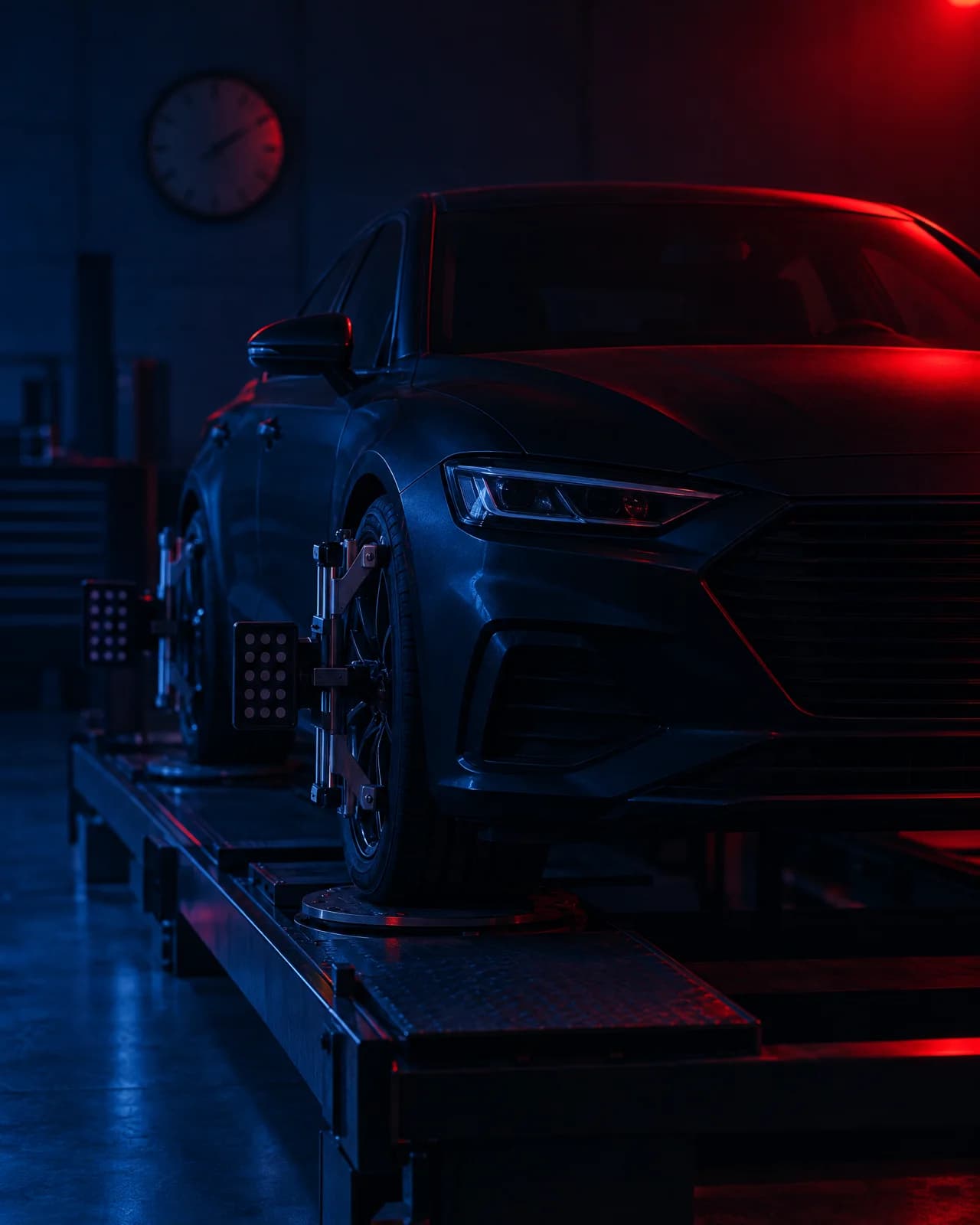
Fit the parts. Set the ride height per corner and, on coilovers, the shock length. Drive it briefly so it settles. Then align — to a setting that suits how the car is driven, not just 'in the green'. When we fit suspension at Brendale, that's the sequence, with the alignment arranged through a trusted provider nearby as the last step. Wheel alignment is arranged through a trusted provider near our Brendale workshop — we don't run alignment equipment in-house.