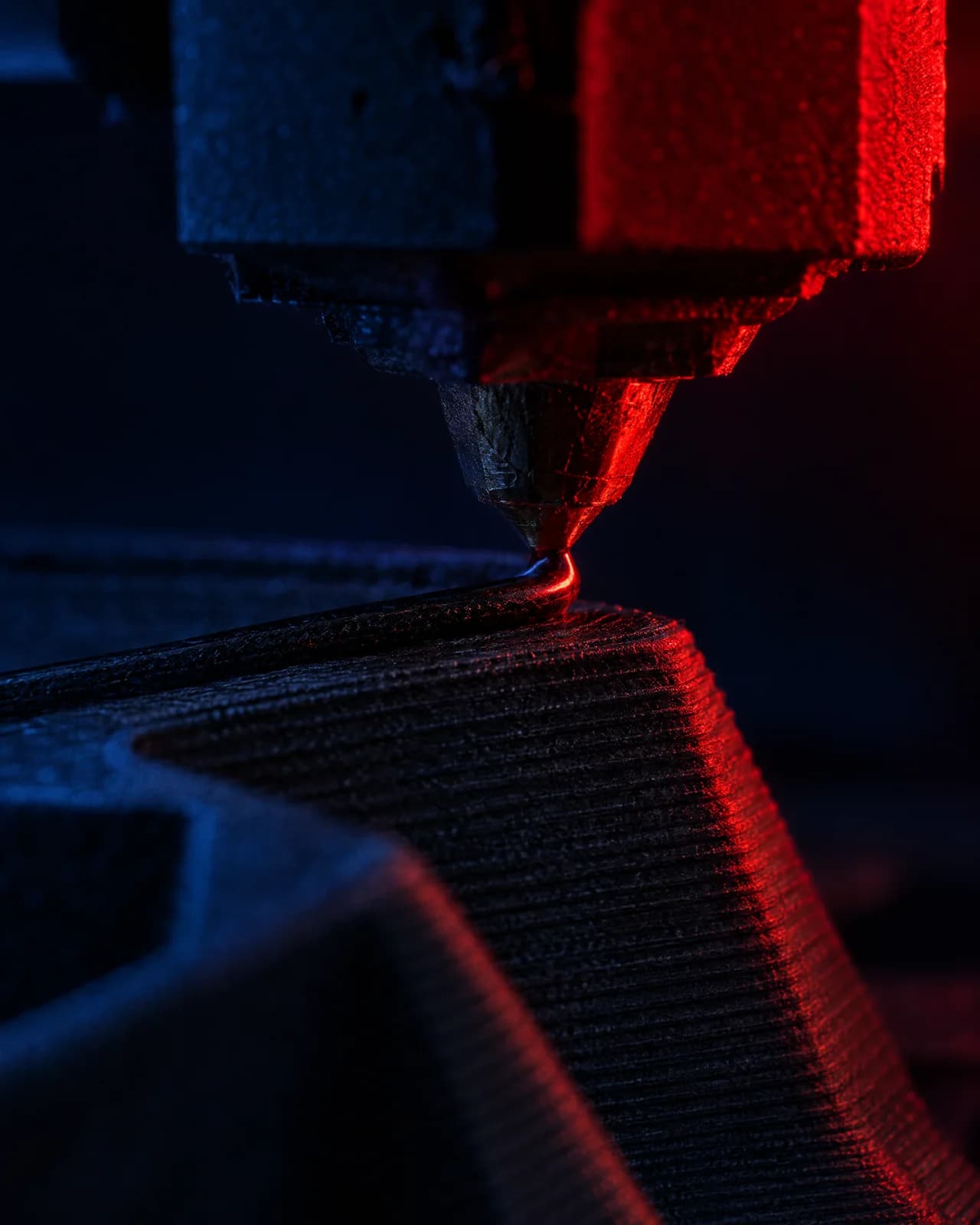
Layer by layer
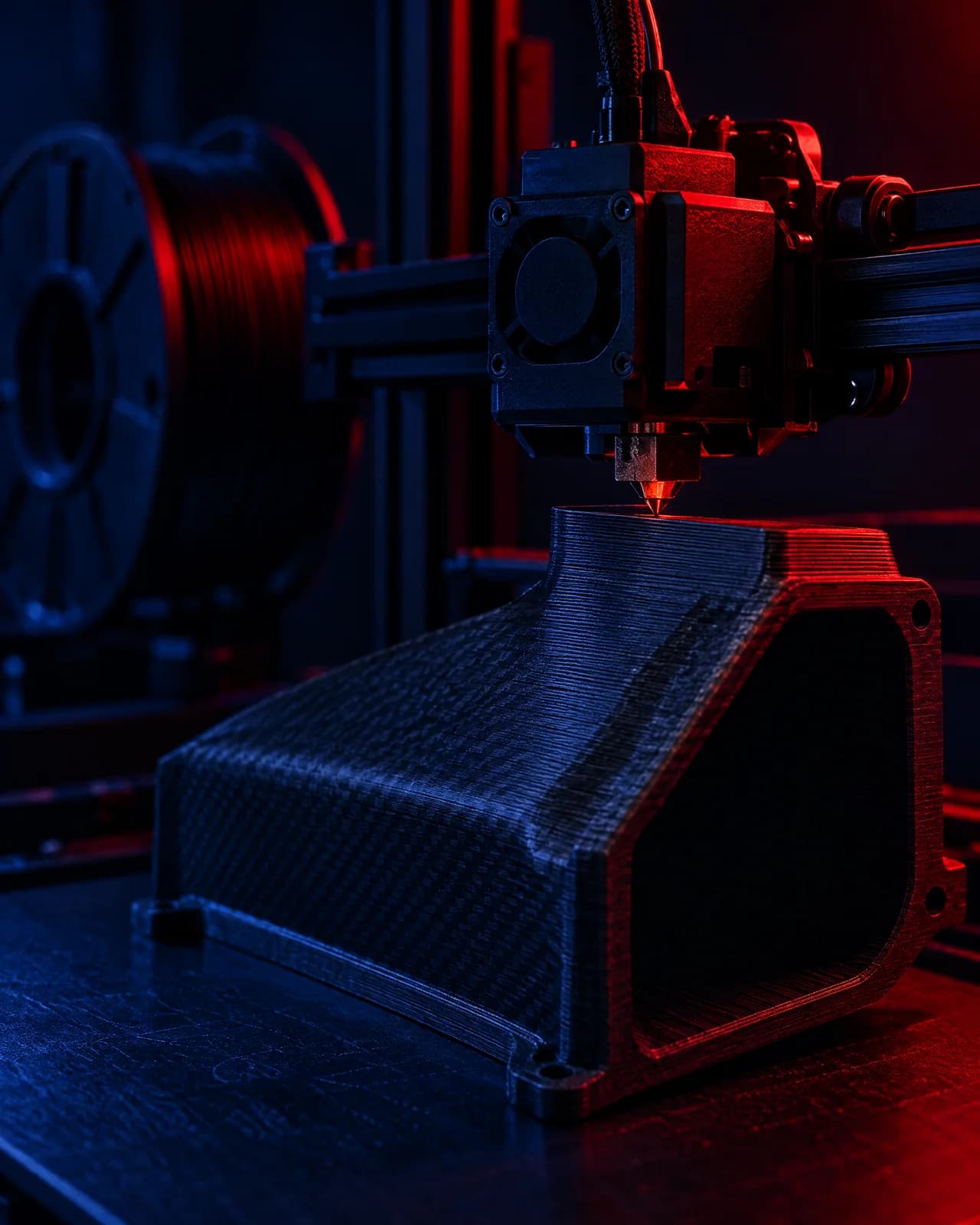
The kind of printing we use for functional parts is FDM: a spool of filament is melted through a nozzle and laid down along a path, one layer at a time, each bonding to the one below. Software slices the CAD model into those layers and plans the paths, including the internal structure — a part can be solid, or hollow with a lattice inside, depending on what it needs to do.
Why orientation decides strength
A printed part is strongest along the layers and weakest across them, where one layer bonds to the next. So the same part printed standing up and lying down has different strength in different directions. Part of the engineering is choosing the orientation so the loads the part actually sees run along the layers — and designing the part so that's possible.
Materials, and what they're for
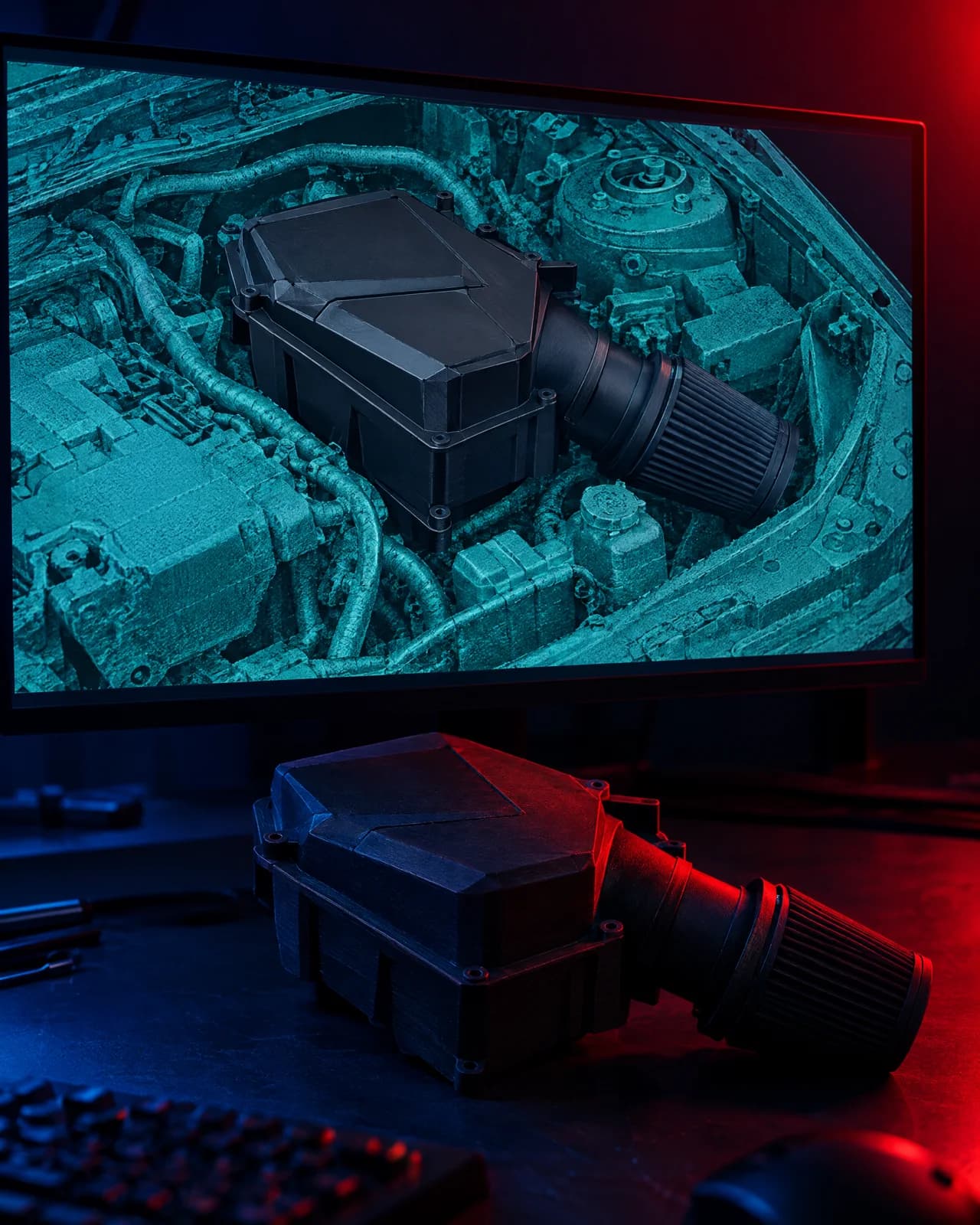
Not all filament is the same, and the cheap stuff has no place near an engine. PC-CF — polycarbonate with carbon-fibre reinforcement — is rigid, strong and handles heat, which is why our airboxes are printed in it. TPU is a flexible polyurethane, used for ducts, gaskets and bushes that need to seal or move. High-temperature nylons and ASA cover other jobs. The material is chosen per part; a claim that's true of one isn't automatically true of another.
Metal printing is available too, for parts that need to be metal. Or the part can be designed for laser cutting, folding or machining — then finished and assembled here.
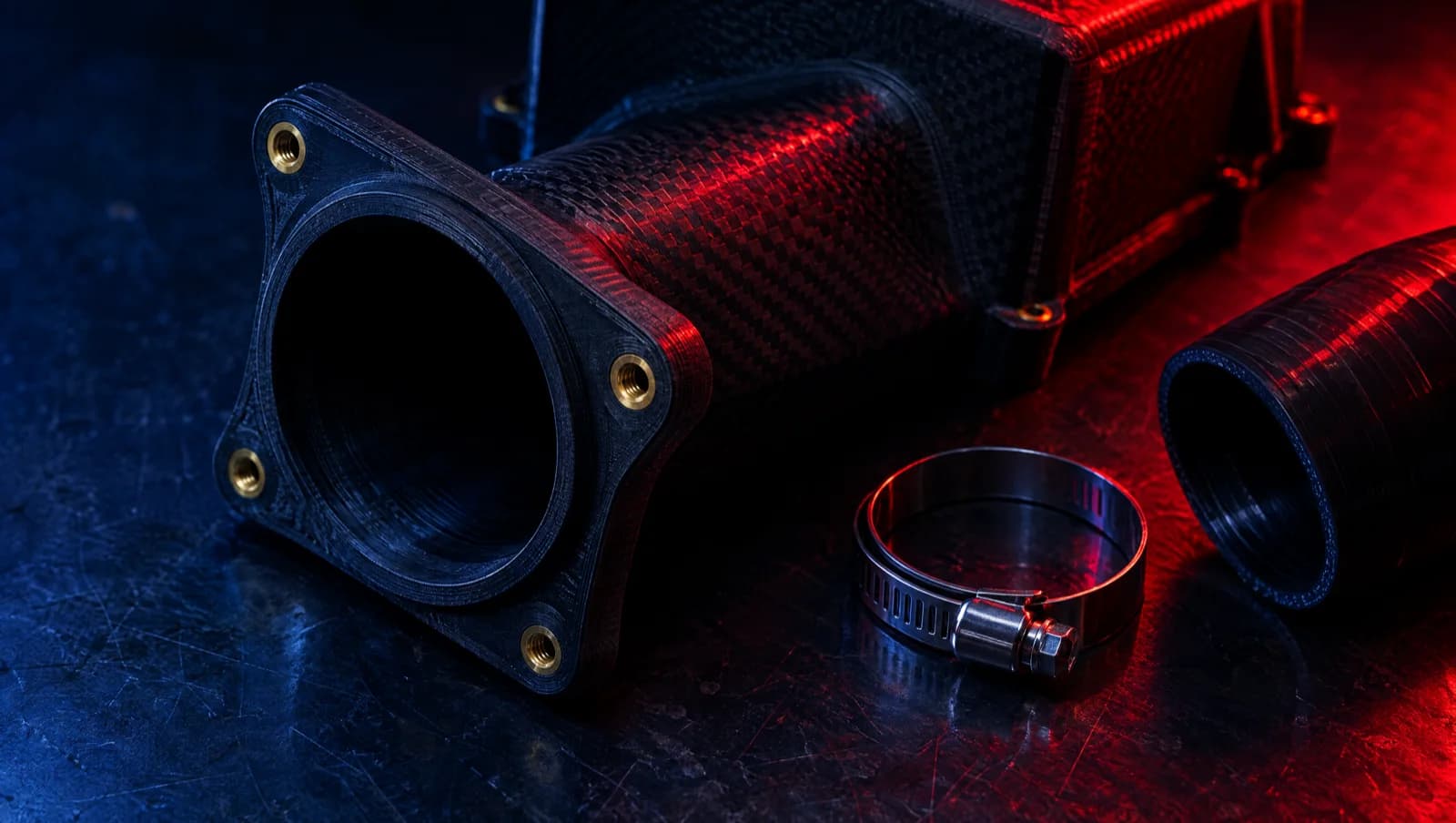
After the print
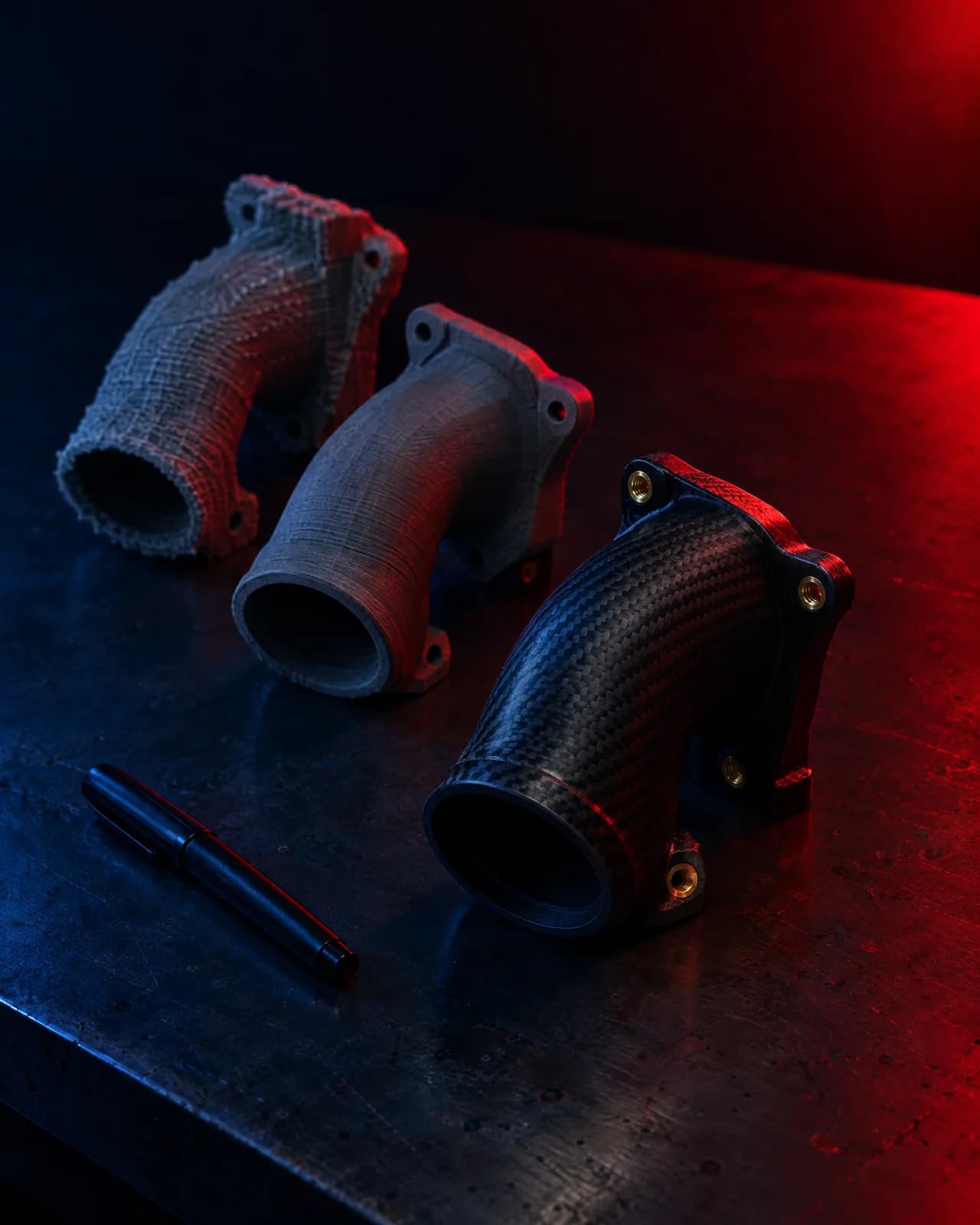
Supports removed, surfaces cleaned up, brass heat-set inserts installed where the part bolts to something, hardware fitted, dimensions checked against the file. A printed part that's meant to be used gets finished like any other component.
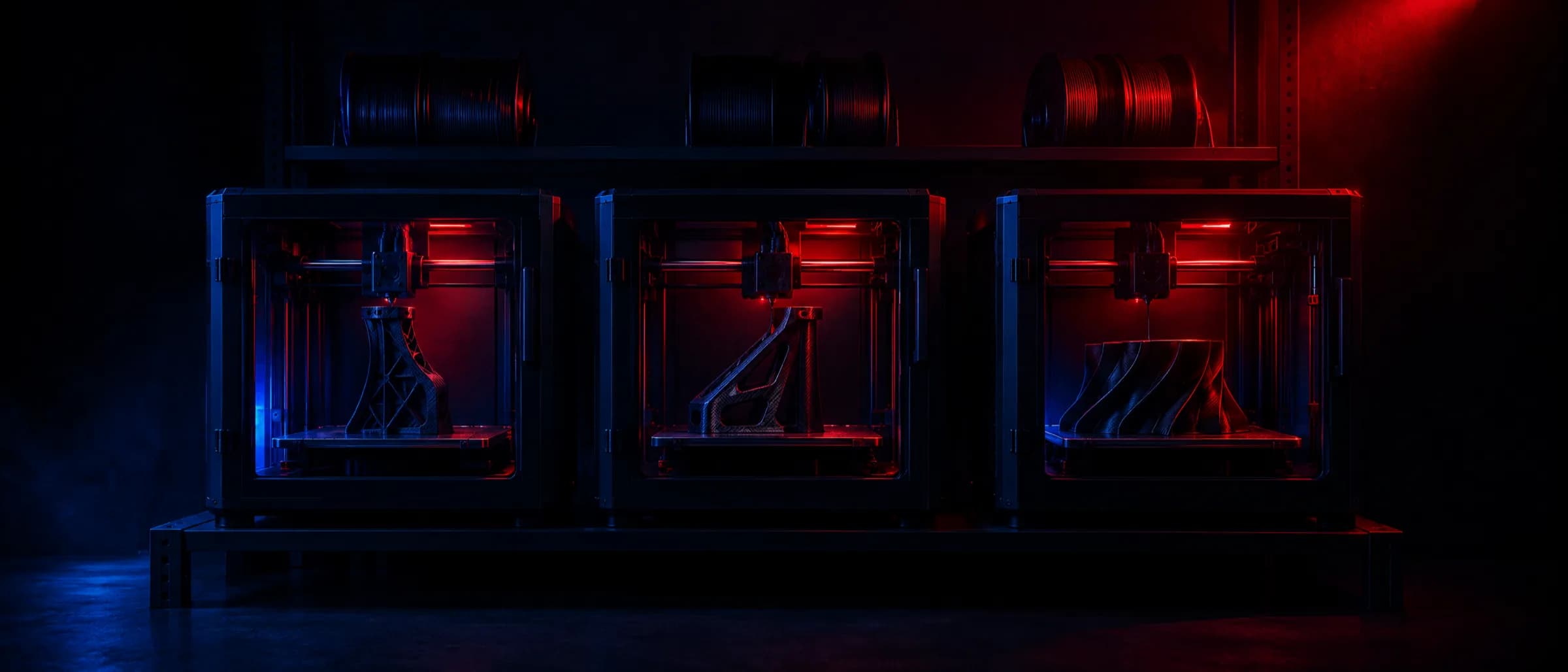
How to get a part printed
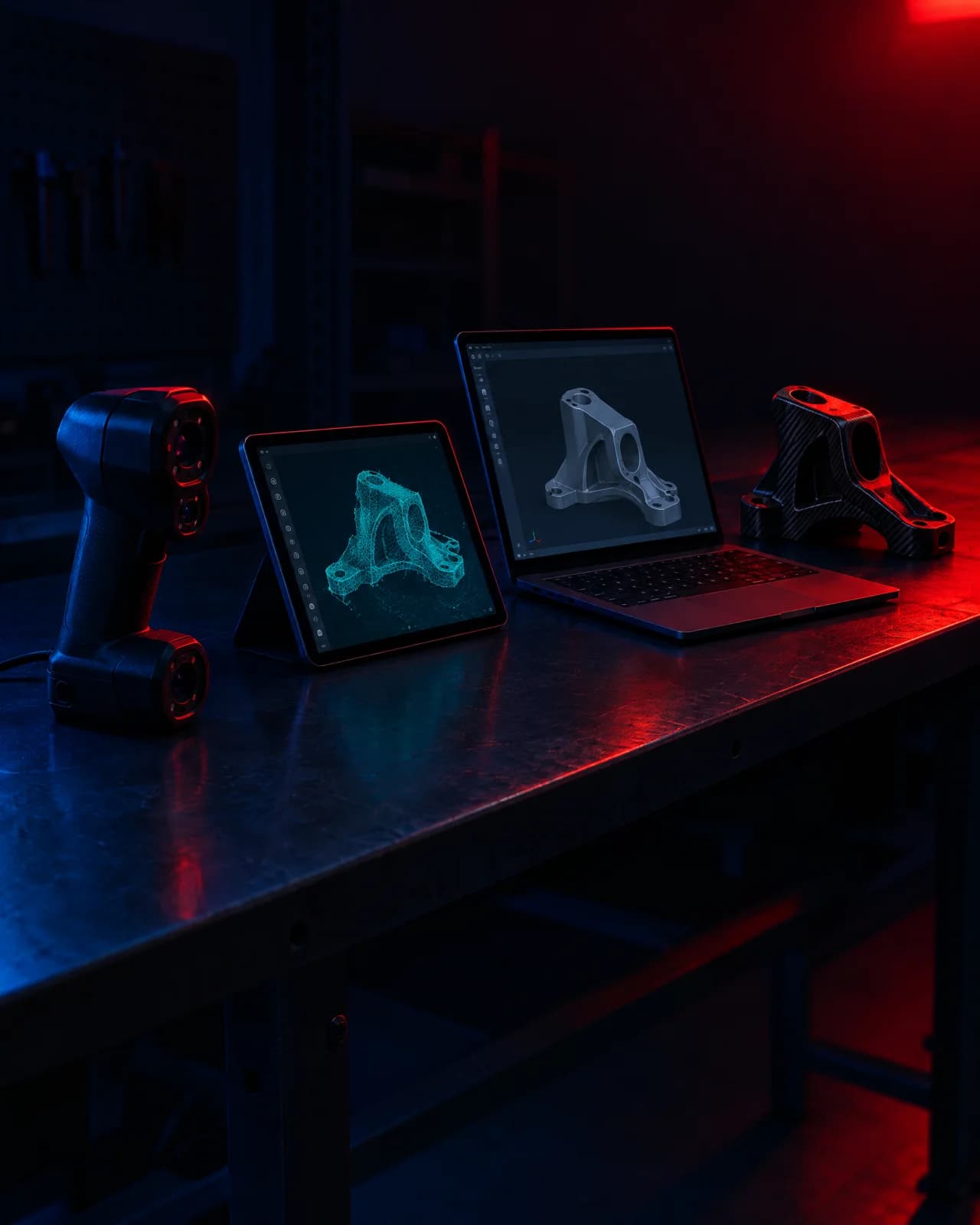
Send a STEP or STL and a note on what the part does and where it lives — heat, load, flex. If you don't have a file, send the idea or the part itself; see scanning and CAD design. We'll come back with material, orientation and a price, and if something about the design won't print well or survive its job, we'll say so before printing it.