Start by listening
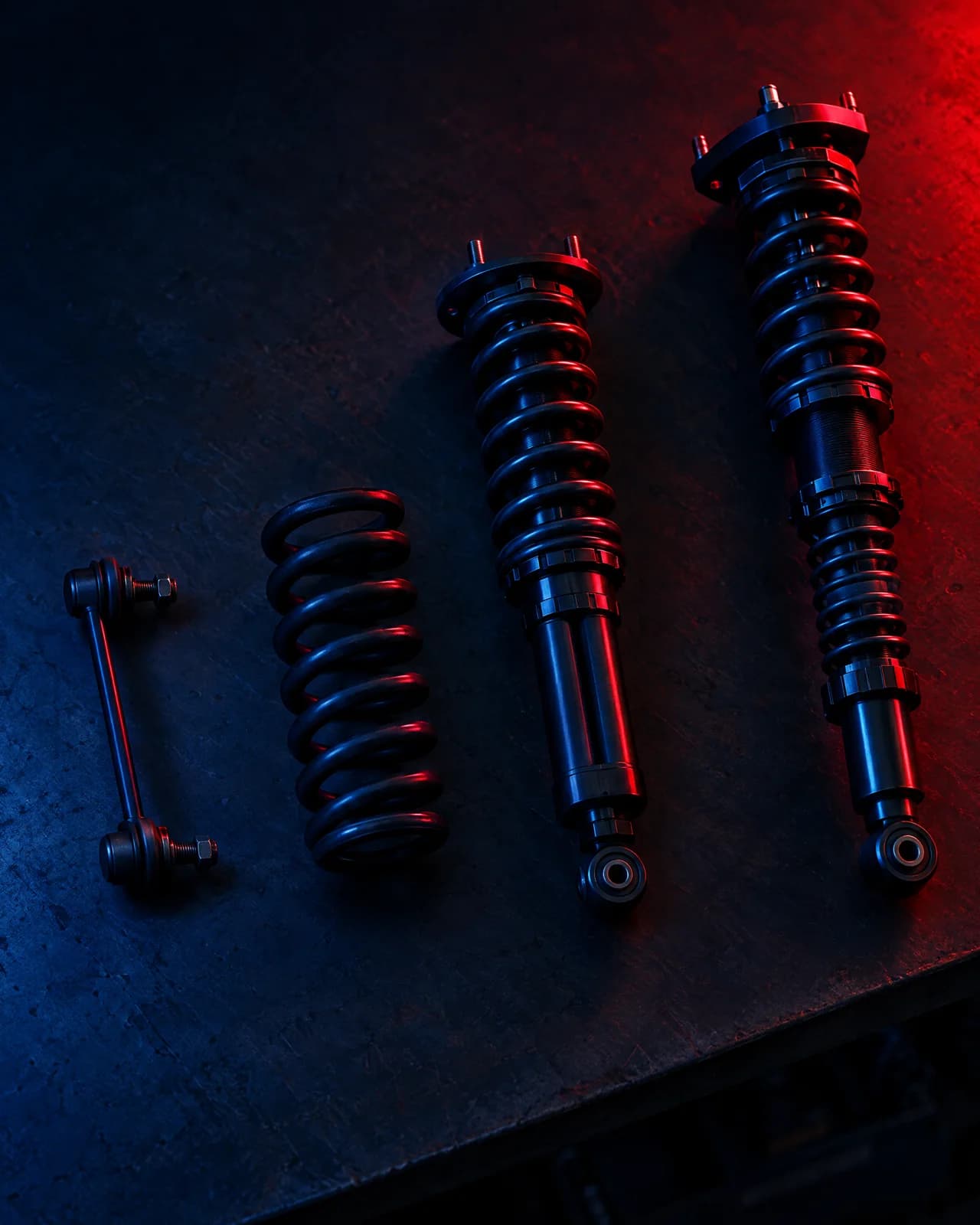
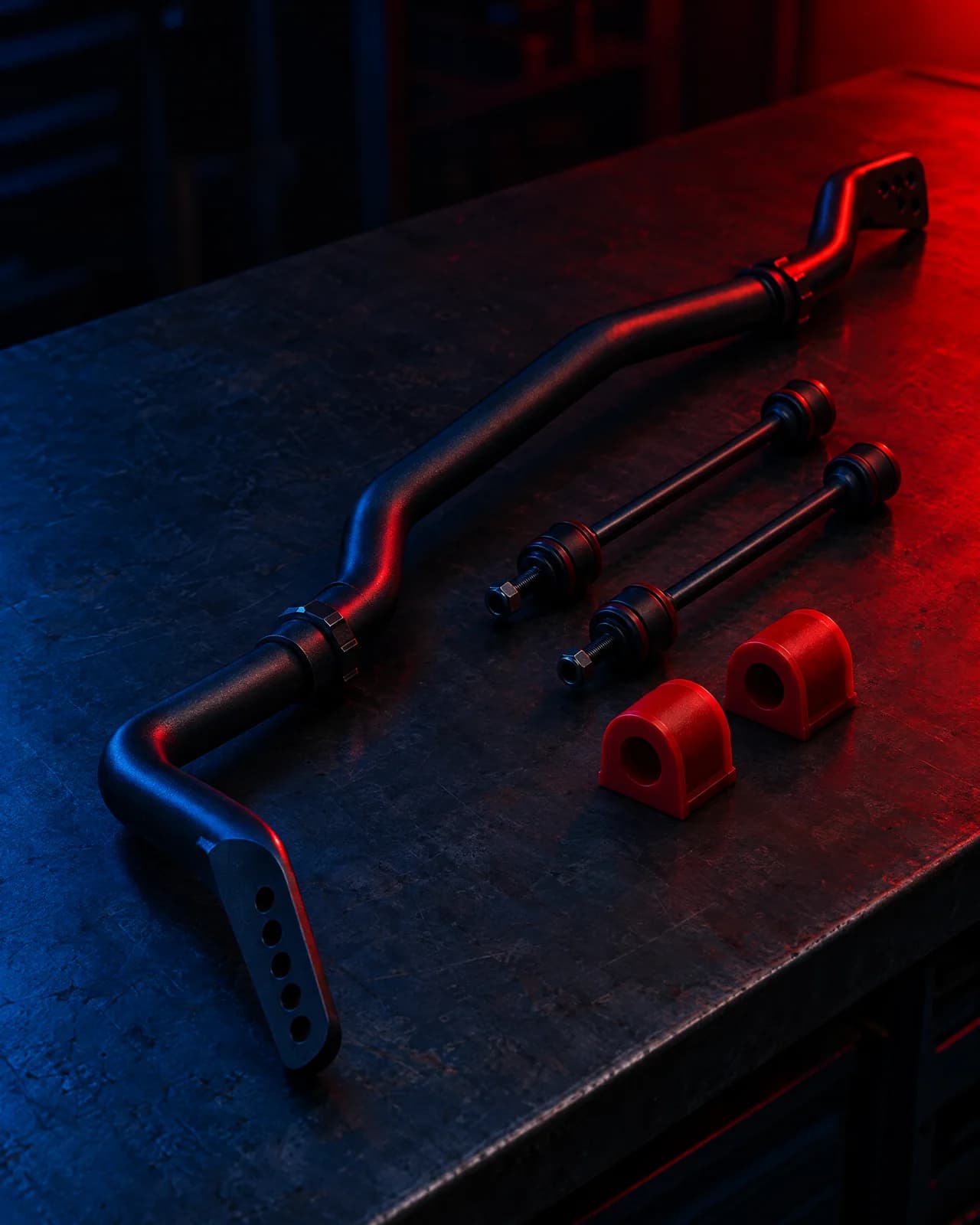
Drive a road you know with the radio off and the windows down. Small, sharp bumps — speed humps, cat's eyes, a broken edge — are what excite the parts that knock. A metallic tap over small bumps is nearly always a sway bar end link, a sway bar bush, or a strut top mount. A duller clunk that changes when you brake or turn is more likely a control-arm bush or ball joint.
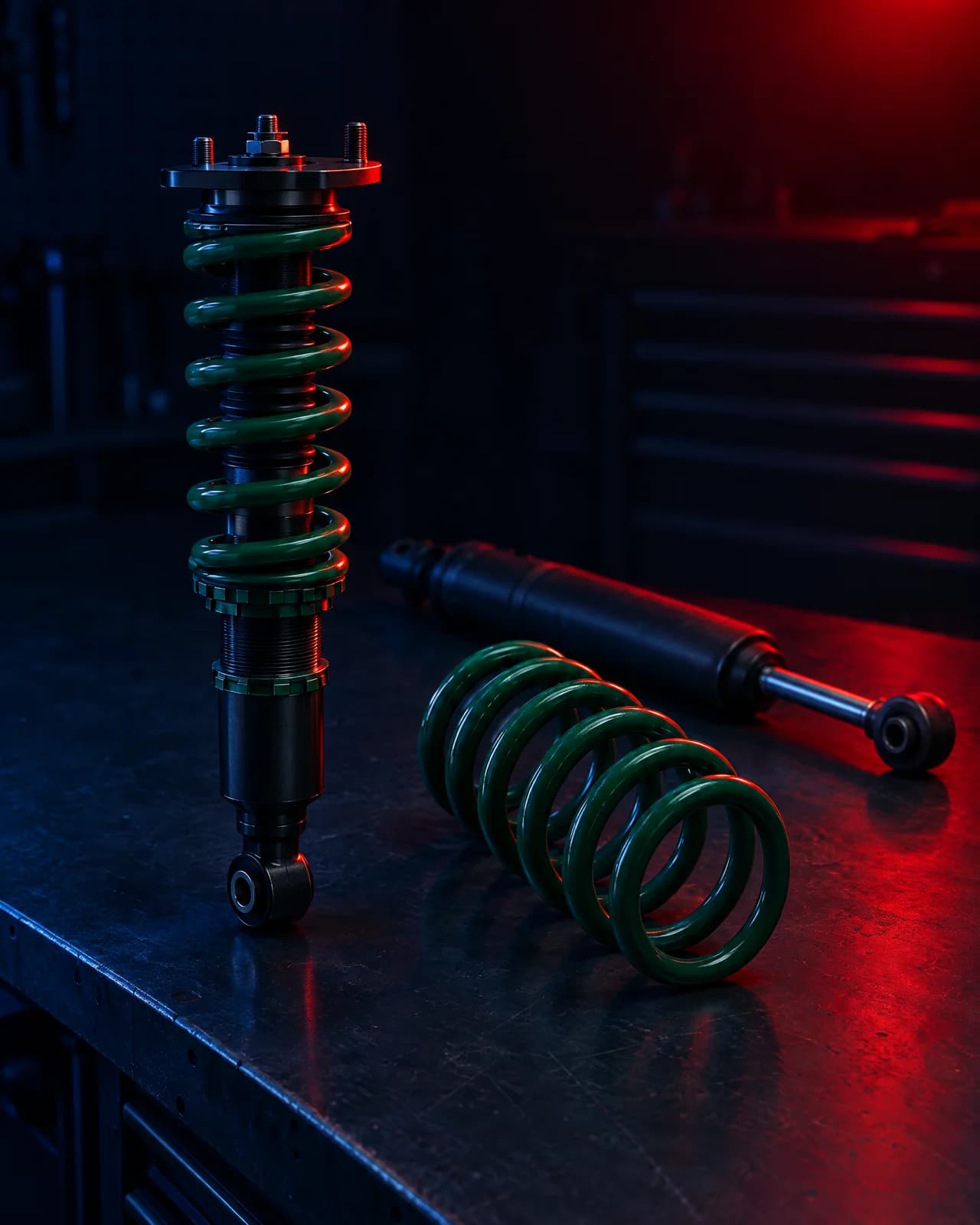
The damper itself rarely makes a noise. When dampers fail they go quiet and floaty, not loud.
Then feel for it
Over a crest, does the car settle in one movement, or does it float and take a second bob to calm down? Under firm braking, does the nose dip and stay there a beat too long? Through a quick lane change, does the rear feel a step behind the front? All three are the signature of dampers that have lost their damping. The springs are still holding the car up — the dampers just aren't controlling the movement any more.
A steering wheel that wanders on a straight road, or needs constant small corrections, is more often alignment or worn bushes than dampers.
Now look — tyres first
Tyres tell you what the suspension has been doing for months. Run a hand across the tread. Wear on the inside edge only usually means too much negative camber or toe-out — an alignment problem, common on lowered cars that were never aligned. A scalloped or cupped pattern, where the tread is worn in waves around the tyre, is a damper that's letting the wheel bounce.
With the wheel turned to full lock, look at the damper body. A film of oil on the lower half means the seal has gone. A dry damper with cupped tyres can still be dead internally, so the tyre evidence wins.
The bounce test, and its limits
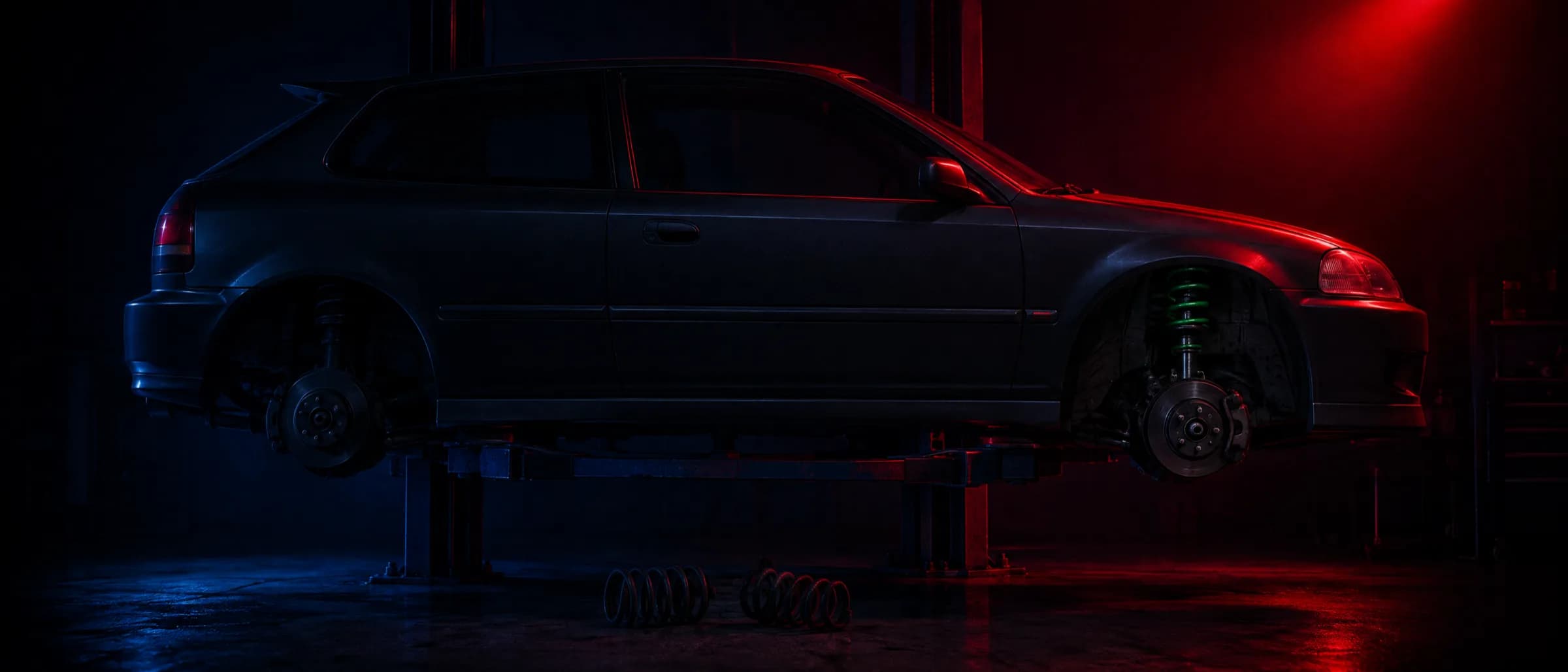
Push down hard on a corner of the car and let go. It should come up and settle in one movement. If it bounces two or three times, the damper on that corner is doing very little. It's a fair test on an older car with soft springs. On a stiffly sprung modern car — or anything with coilovers — the springs are firm enough that a bad damper can still pass, so treat a pass as inconclusive, not a clean bill.
If you've lowered the car and never had it aligned, do that before chasing anything else. Half the 'suspension problems' we see on lowered cars are geometry.
Bushes: the part everyone forgets
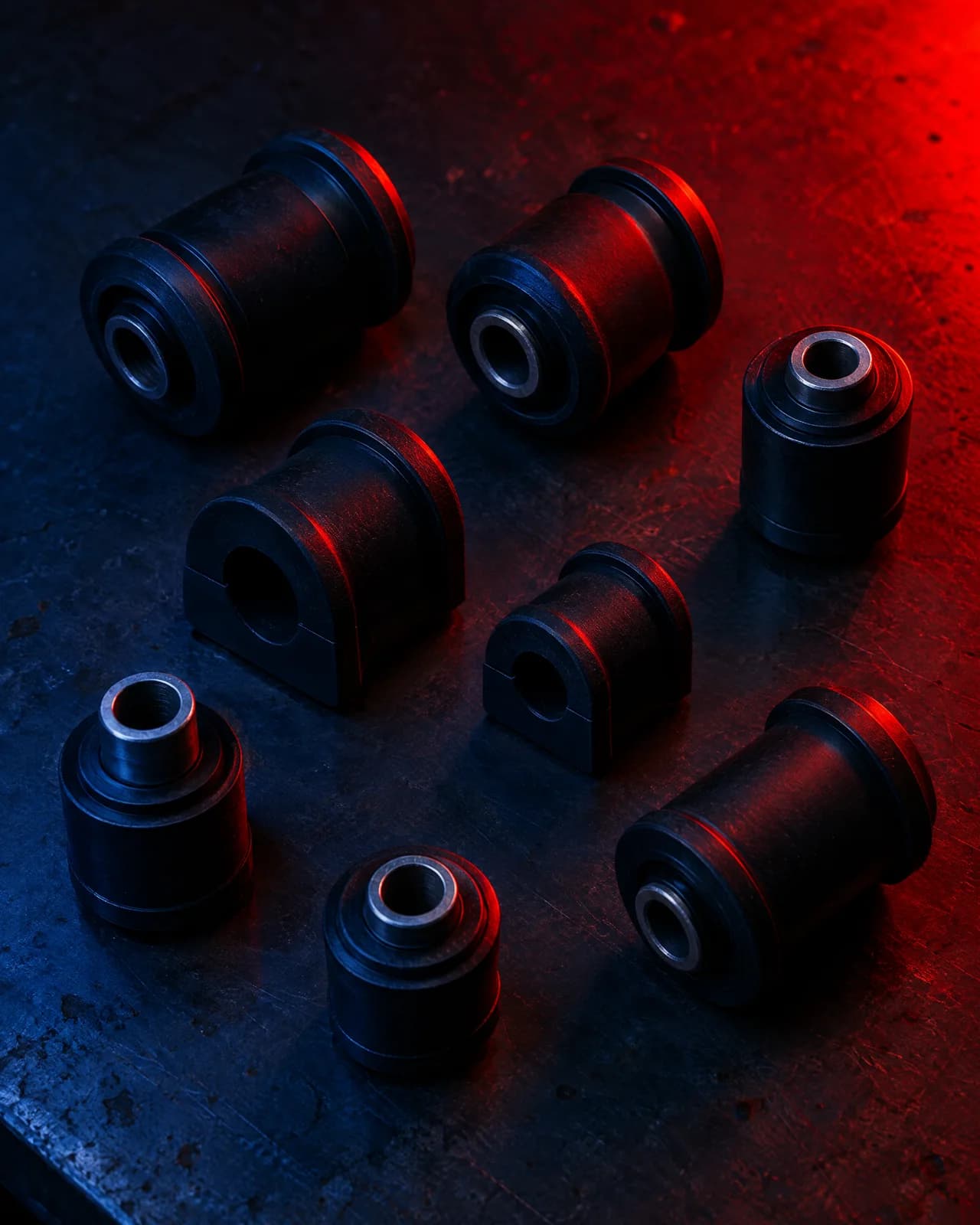
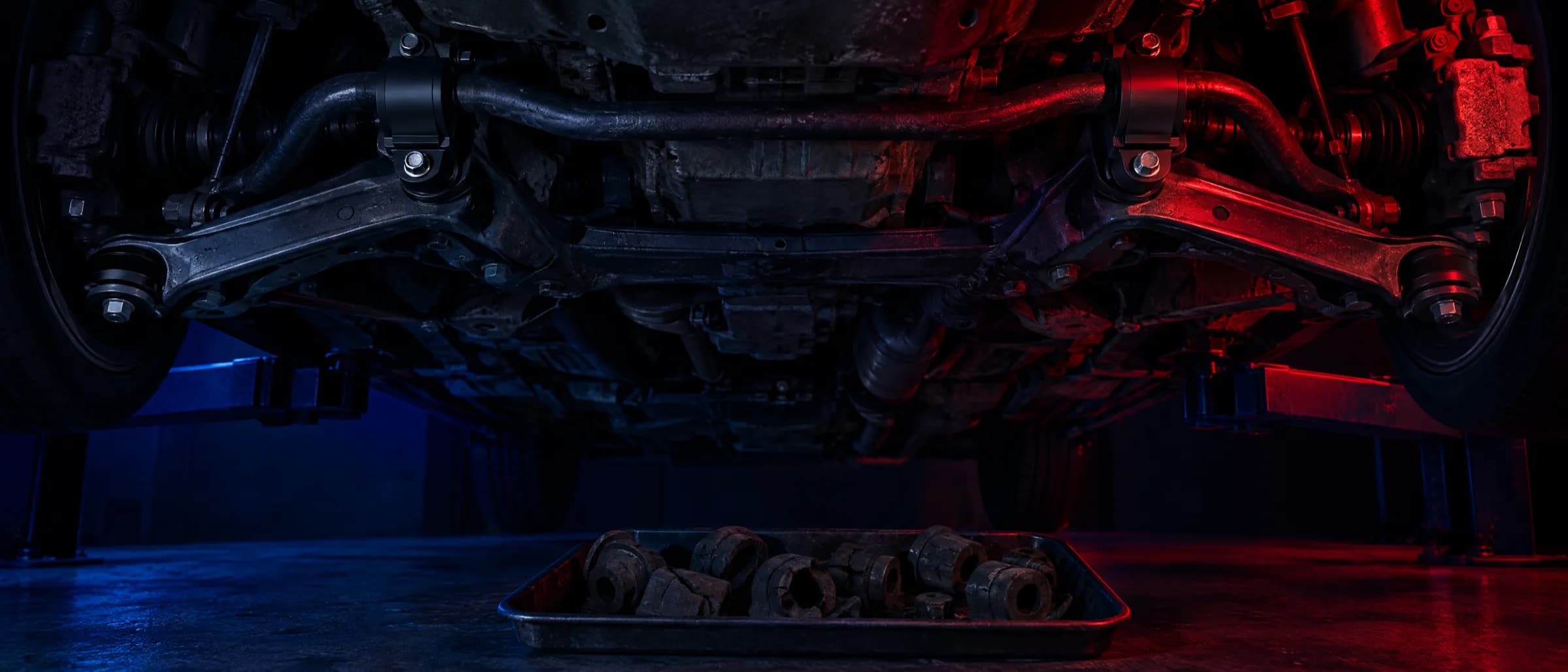
Rubber bushes locate every arm and bar on the car. When they soften and crack the arm moves where it shouldn't, and the result is vague steering, a shudder under braking, and clunks that a new damper won't fix. With the car safely on stands, lever against a control arm with a pry bar and watch the bush: visible movement is a worn bush. Polyurethane replacements are a proper fix, not a band-aid — see the bushes page.
When to stop and bring it in
If a wheel has any play when rocked at twelve and six o'clock, that's a wheel bearing or ball joint and it's a safety item. If a spring is broken — usually the bottom coil — it's the same. Everything else can wait for a proper look. Bring it to us in Brendale and we'll tell you what it actually needs; if the answer is 'an alignment and two links', that's what you'll be quoted.