How it works
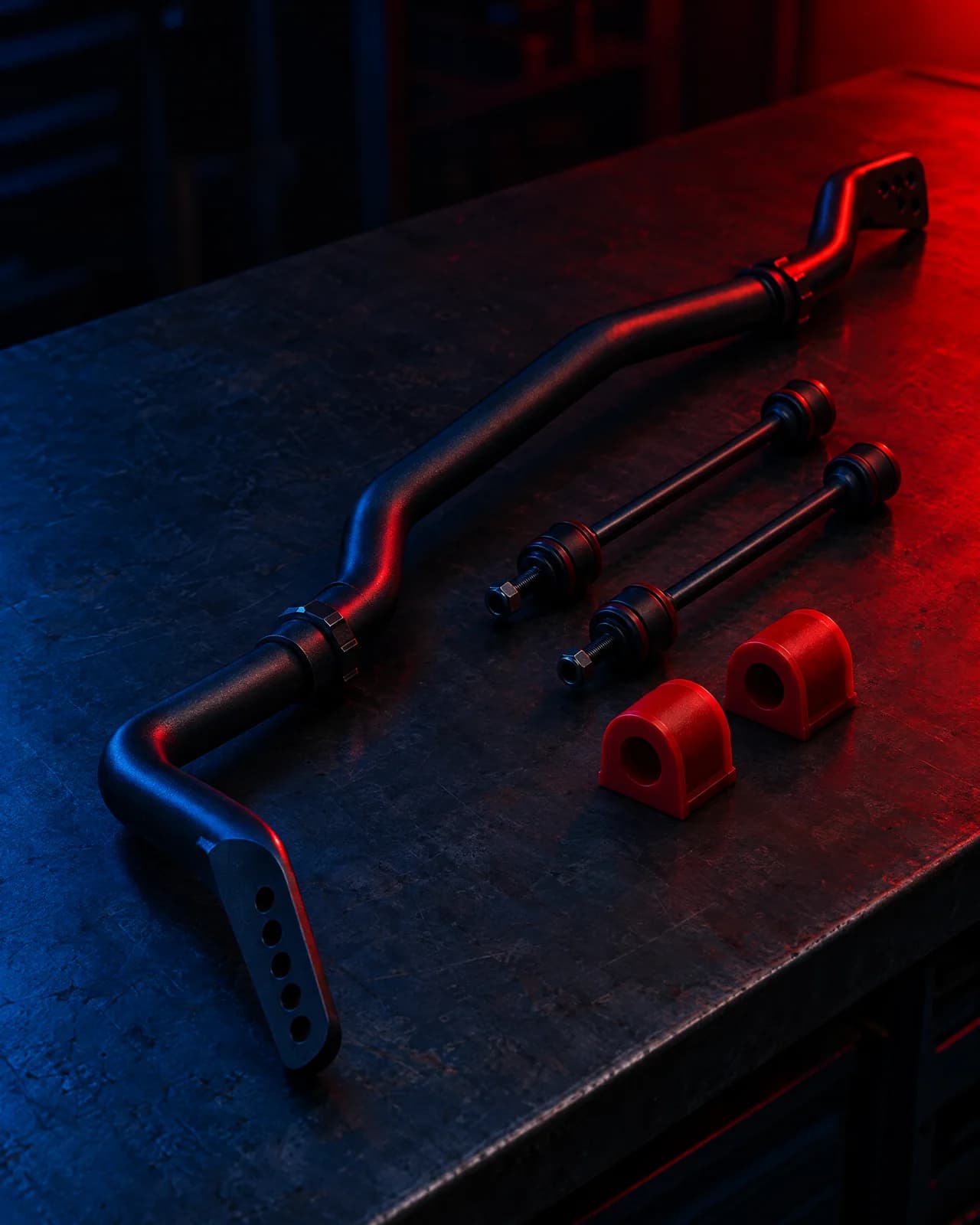
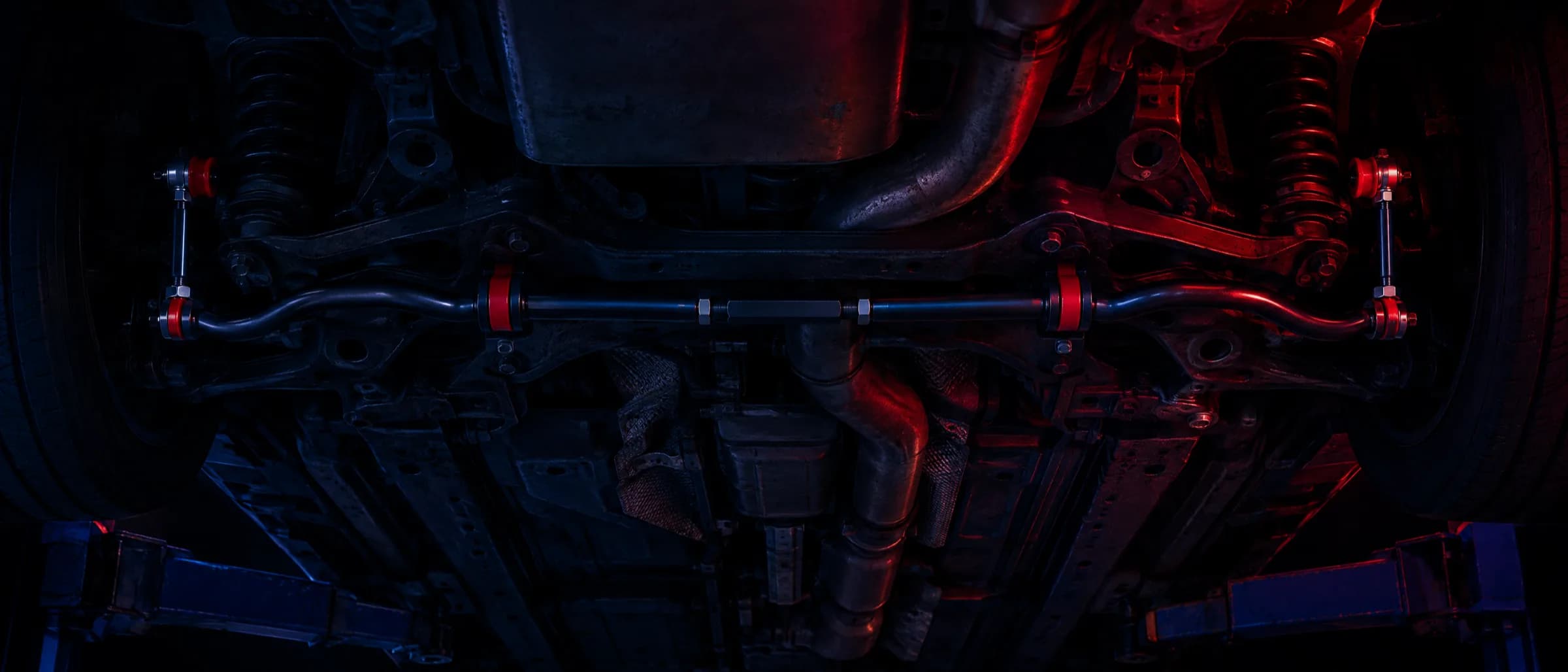
A sway bar — anti-roll bar, stabiliser bar, same thing — is a torsion spring that connects the left and right suspension on one axle. When both wheels move together, over a bump, the bar just rotates and does nothing. When the car leans in a corner and one wheel compresses while the other extends, the bar twists and resists. Stiffer bar, less roll.
That's why it's the rare upgrade that changes cornering without changing ride: in a straight line it isn't in the equation.
Why less roll means more grip
When a car rolls, the outside tyre gets loaded and the inside tyre gets unloaded, and the tyre's contact patch tilts with the body. Less roll keeps the tyre flatter on the road and the load spread more evenly, so the front turns in sharper and the whole car feels more settled mid-corner. The change is immediate and obvious, which is why the Street package is built around bars before anything else.
Front, rear, and balance
Stiffening the front bar alone pushes a car toward understeer; stiffening the rear alone pushes it toward oversteer. That's not good or bad — it's a tuning tool. A front-wheel-drive hatch that pushes wide often wants a stiffer rear bar. A rear-drive car that's nervous at the limit may want the opposite. Adjustable bars have several link positions so the balance can be moved without changing parts, which is what setup means for a sway bar.
Fitting a much stiffer rear bar to a front-wheel-drive car without thinking about balance can make it lively in the wet. Balance is a setting, not an afterthought.
Links and bushes — the parts that go first
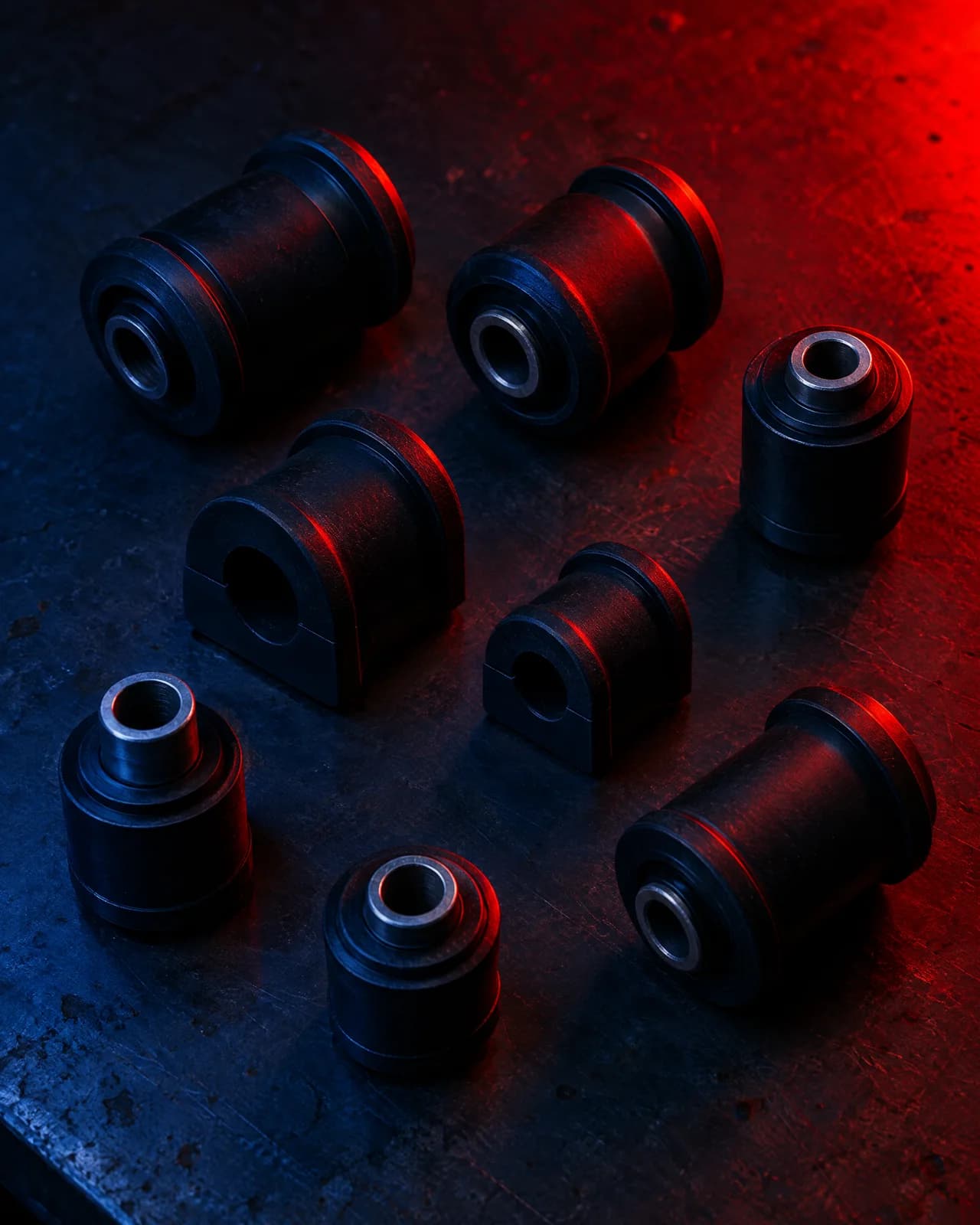
The bar is connected to the suspension by end links and located on the body by bushes. Worn links knock over small bumps and let the bar move before it starts working; soft rubber bushes flex under load and blunt the response. New links and polyurethane bushes are often fitted with an upgraded bar — and on a car with a decent factory bar, sometimes they're the whole fix.
Are Whiteline sway bars good?
Yes. Whiteline are an Australian company whose bars are adjustable, chassis-specific and well made, and they're what we fit — we're a dealer for them, chosen on experience with the product rather than on margin. The bigger question isn't the brand; it's whether the bar is set up for the car's balance. That's the part we do.